How to Clean a Draining Ear: Safe Steps and Mistakes to Avoid
A draining ear is usually a sign of infection. Learn how to keep the ear clean while it heals, what mistakes to avoid, and when to see a doctor right away.
On this page
Knowing how to clean a draining ear the right way can help treat what is causing the drainage, help the ear heal, and prevent serious complications.
Fluid or pus draining from the ear is usually a sign of an ear infection. It can also happen when an insect or another object is stuck in the ear, or, rarely, after a head injury. Treatment focuses on the cause, and keeping the ear clean helps it heal faster. This guide explains how to care for a draining ear and the common mistakes to avoid.
What causes a draining ear?
Drainage from the ear is fairly common, and it is more common in children than in adults. In most cases it is caused by an ear infection, either a middle ear infection (otitis media) or an outer ear infection (otitis externa). Drainage can also happen when an object is stuck in the ear or, less often, after an injury to the head.
The fluid can have no smell or a bad smell. It may be clear, slightly yellow, or green, depending on how severe the problem is and what is causing it. Other symptoms that often come with ear drainage include:
- Ear pain
- Itching inside the ear
- Ringing in the ear (tinnitus)
Some people have more serious symptoms and need to see a doctor right away. These include:
- Fever
- A red rash on the skin around the ear
- Hearing loss
- Problems with the cranial nerves, such as trouble swallowing, trouble speaking, or poor vision
What mistakes should you avoid when cleaning a draining ear?
If you notice drainage from your ear, see a doctor to have the ear checked and to find out whether an infection is the cause. The symptoms of an ear infection often flare up quickly and may go away on their own within a few days, although some symptoms can last up to a week afterward.
Besides taking any medicine your doctor prescribes, you also need to care for the ear properly. This helps you recover faster, lowers the risk of complications, and helps prevent a second infection. For that reason, avoid the following:
- Trying to remove earwax with any tool, such as a cotton swab or an ear-pick, or poking a finger into the ear.
- Letting water or soap get into the ear.
- Putting medicines such as decongestants or antihistamines into the ear on your own.
- Not practicing good nose and throat hygiene, which makes it easier for germs (bacteria, viruses, and others) to spread from the nose and throat to the ear, and from the ear to the nose and throat.
If your symptoms do not improve after a few days of caring for the ear at home, see an ear, nose, and throat (ENT) doctor for an exam and full treatment.
If the drainage is not caused by an infection, you need to go to the hospital to have the ear checked and get the right treatment.
How do you care for an ear that is draining from an infection?
In general, caring for an ear that is draining because of an infection involves three steps.
Step 1: Keep water out of the ear when you bathe or wash your hair
You can cover the ear during a bath or shower like this:
- Take a cotton ball and soak it with a little oil.
- Squeeze the cotton ball so it is not too wet.
- Place the cotton ball at the opening of the ear canal. Do not push it deeper into the ear.
- Take the cotton ball out after you finish bathing or washing your hair.
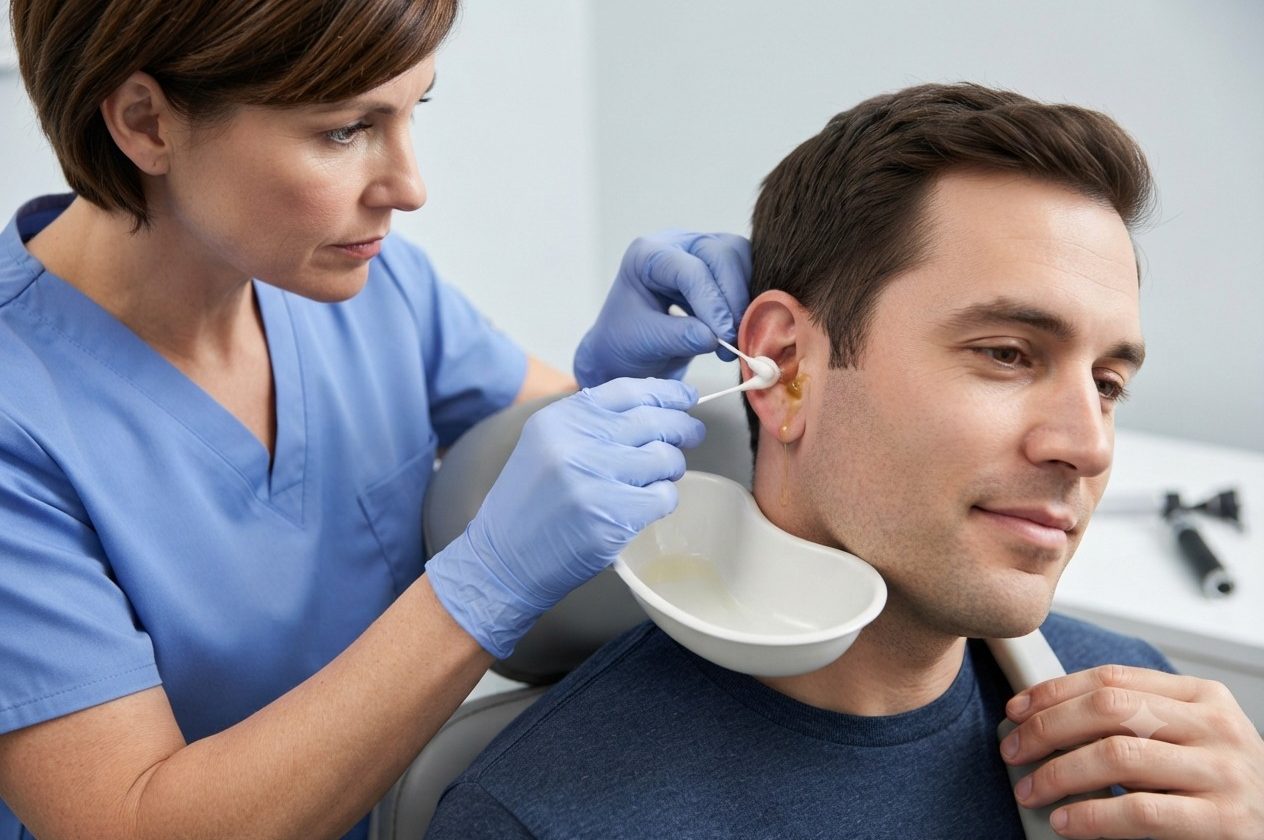
Step 2: Use a twisted tissue to soak up the pus
To absorb the pus that drains from the ear, you can follow these steps. Ask your doctor first whether this step is right for your ear, and do not use anything else, such as a cotton swab or your finger, to clean inside the ear.
- Take a piece of soft tissue and twist it into a long, narrow strand.
- Gently pull the outer ear outward.
- Place the twisted tissue into the ear canal. As with the cotton ball, do not push it deep into the ear.
- Leave the tissue in place for a few minutes so it soaks up the pus inside the ear.
- Take the tissue out and look at it.
If the tissue is full of pus, use a new piece of tissue and repeat the steps above until no more fluid soaks into the tissue.
Step 3: Use ear drops correctly, as your doctor directs
If your doctor prescribes ear drops, you need to use them the right way for the treatment to work well. If your prescription says something different from the steps below, follow your doctor’s instructions.
- Clear the ear canal of all the drainage first, using the tissue method above.
- Tilt your head so the ear faces up.
- Gently pull the outer ear back and up. When giving drops to a young child, gently pull the child’s outer ear back and down instead.
- Put 2 to 3 drops of medicine into the ear canal.
- Gently press on the small flap in front of the ear canal and move it so the drops flow inside.
- Put 2 to 3 more drops into the ear canal.
- Keep gently pressing on the ear with your finger for a few minutes.
- Stay in this position, with the ear facing up, for 5 minutes. Then repeat on the other ear if it also needs drops.
- If any medicine spills out of the ear, wipe it away.
The bottom line
Most draining ears can be treated easily. If the ear is infected, a doctor may prescribe antibiotics, either by mouth or as ear drops, to kill the germs causing the infection. Caring for the ear the right way, as described above, also helps you get better faster.
References
Medical disclaimer
FAQHealth content is for informational and educational purposes only. It is not a substitute for professional medical advice, diagnosis, or treatment. Always talk with your doctor or another qualified health professional about any questions you have about a medical condition.