How Does Syphilis Spread? Transmission Routes and Prevention
Syphilis spreads mainly through sex, but also through blood and from mother to baby. Learn how it passes on, who is at risk, and how to prevent it.
On this page
Syphilis is a serious sexually transmitted infection (STI). It can cause major health problems if it is not found early and treated properly. So how does syphilis spread, and how easily can you catch it?
This guide explains how syphilis is transmitted, who is most at risk, how it progresses, and what you can do to prevent it.
What is syphilis?
Syphilis is a sexually transmitted infection caused by the bacterium Treponema pallidum. After it enters the body, the bacterium can stay there for many years without causing any typical symptoms.
Syphilis develops in stages: primary, secondary, latent, and tertiary. Each stage can have different signs and symptoms. Usually, the first sign you can notice is a painless sore on the genitals, rectum, or mouth.
Syphilis can be treated with antibiotics. Without treatment, it can lead to serious, even life-threatening, problems in the eyes, heart, brain, nervous system, and other organs.
Is syphilis contagious? Who is most at risk?
Syphilis can pass directly from person to person, and anyone can get it. Some people are at higher risk, including people who:
- Have unsafe sex, such as sex without protection or with multiple partners
- Have HIV
- Are gay or bisexual men
- Are taking pre-exposure prophylaxis (PrEP) to prevent HIV
- Have a sexual partner who has tested positive for syphilis
- Have tested positive for another sexually transmitted infection, such as chlamydia, gonorrhea, or herpes
How does syphilis spread?
There are several ways syphilis can be transmitted. The most common ones are described below.
Sexual contact
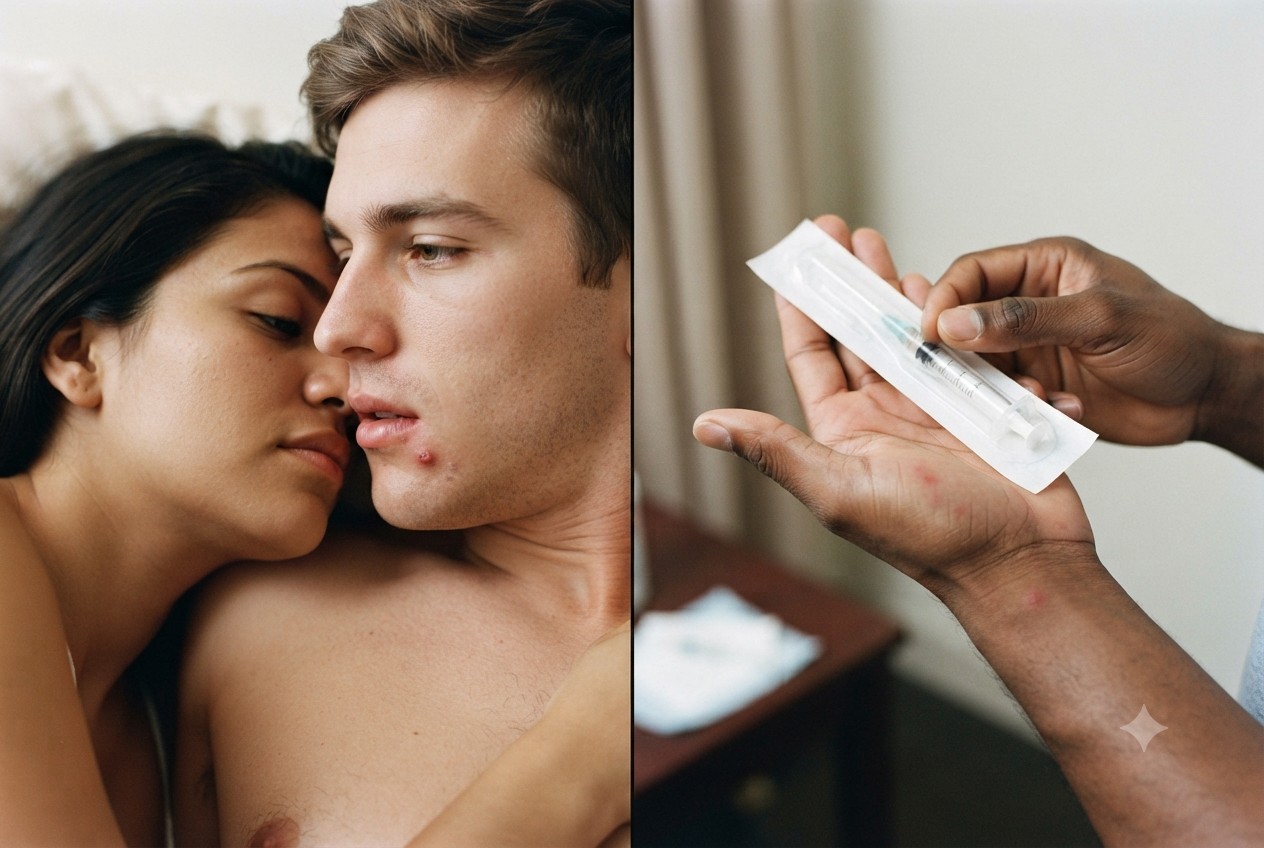
The most common way syphilis spreads is through unprotected sex with an infected person. You can catch syphilis by coming into direct contact with a syphilis sore during vaginal, anal, or oral sex.
This means you can become infected even if there is no ejaculation and no deep penetration. If any part of your body touches the sore of a person who has syphilis, the bacterium can pass to you. This also answers a common question: whether syphilis can spread through saliva. The risk comes from contact with a syphilis sore, including during oral sex.
Blood
Syphilis can also spread through blood. This usually happens when someone:
- Shares needles with a person who has syphilis
- Has an unsafe blood transfusion, blood donation, or organ transplant
From mother to baby
Syphilis can also pass from a mother to her child. If a pregnant woman has syphilis, the baby can become infected through the placenta. This is called congenital syphilis. A newborn can also get syphilis by coming into contact with the mother’s syphilis sores during a vaginal birth.
A woman who has syphilis during pregnancy may have complications such as miscarriage, preterm birth, stillbirth, or a low-birth-weight baby. For this reason, pregnant women should be tested for syphilis at least once during pregnancy.
Can syphilis spread through indirect contact?
Some people also wonder whether syphilis can spread through clothing or everyday objects.
The syphilis bacterium usually cannot survive outside the body for more than a few hours, and antiseptics can kill it within minutes. So your risk is low from ordinary contact with objects such as doorknobs, personal items, bathtubs, and toilet seats.
However, if you have a cut or scrape on your skin, the bacterium can spread through contact with fluid from a syphilis sore. It can enter through the open wound, reach the bloodstream, and spread through the body.
The main ways syphilis spreads
In summary, syphilis can spread through:
- Sexual contact
- Blood
- The placenta, from a pregnant woman to her baby
- Vaginal birth, from mother to baby
What are the signs and symptoms of syphilis?
Knowing the signs of syphilis helps you get treated in time. Syphilis can progress through four stages, and the symptoms are different at each one. The typical signs are:
- Primary stage: A firm, smooth, painless sore usually appears. The sore often goes away on its own after a few weeks or months, but that does not mean the infection is gone.
- Secondary stage: A coin-shaped rash appears across the body. The rash is rough but usually not itchy. Other symptoms can include fever, tiredness, muscle aches, weight loss, swollen lymph nodes, headache, and hair loss.
- Latent stage: If syphilis is not treated in the first two stages, it moves into the latent stage. Few or no signs appear at this stage. However, the infection can last for up to 20 years and may damage the heart, bones, nerves, and other organs.
- Late (tertiary) stage: About 20% of people with syphilis reach the late stage. A range of serious health problems can develop slowly, including brain damage, memory loss, thinking (cognitive) problems, heart disease, movement disorders, nerve damage, seizures, and vision problems.
How can you prevent syphilis?
To lower your risk of getting syphilis, follow these steps:
- Use protection (a condom) during sex, including oral sex.
- Do not share needles with anyone.
- Do not share sex toys with other people.
- Get regular checkups so syphilis and other health problems are found early.
- If you or your partner has syphilis, finish treatment completely before having sex.
- If you are planning a pregnancy, see a doctor for a checkup to find out whether you have syphilis.
- If you are pregnant, get tested for syphilis at least once during pregnancy.
Knowing how syphilis spreads, and following these prevention steps, is the best way to lower your risk of infection.
References
Medical disclaimer
FAQHealth content is for informational and educational purposes only. It is not a substitute for professional medical advice, diagnosis, or treatment. Always talk with your doctor or another qualified health professional about any questions you have about a medical condition.