L4-L5 Herniated Disc: Symptoms, Causes, and Treatment
An L4-L5 herniated disc can cause low back pain, leg pain, and numbness. Learn the causes, treatment options, possible complications, and how to cope.
On this page
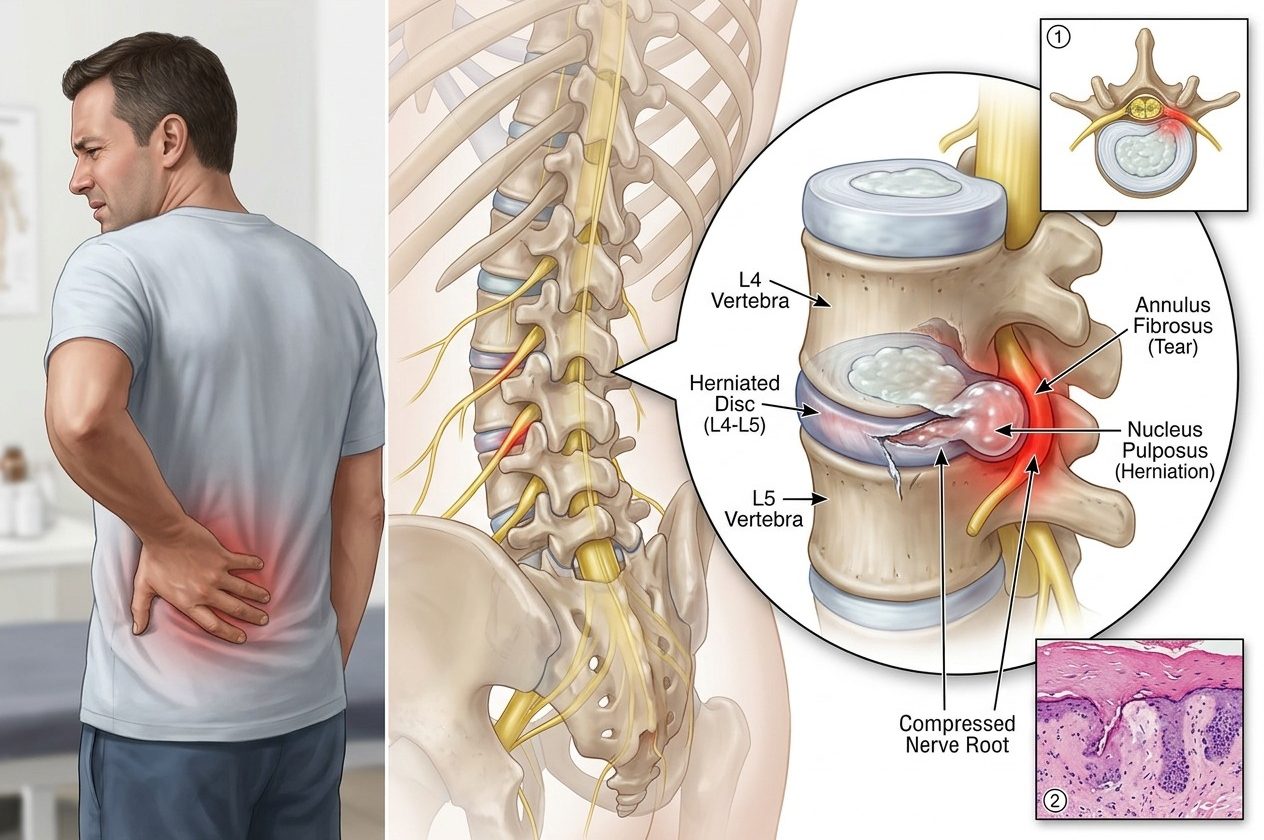
An L4-L5 herniated disc is one of the most common problems that comes with wear and tear (degeneration) of the lower spine. Treatment is often long and difficult, and some people even need surgery to get back to normal life. That is why it helps to know what this condition is and how it is managed.
This guide explains the symptoms, causes, treatment, and possible complications of an L4-L5 herniated disc, and what you can do to improve your outcome.
What is an L4-L5 herniated disc?
The spine is made up of 33 vertebrae (the bones of the spine): 7 in the neck (cervical spine), 12 in the upper and middle back (thoracic spine), 5 in the lower back (lumbar spine), and the sacrum and tailbone (coccyx) at the bottom. A cushion called a disc sits between the vertebrae to protect the bones from the shocks of everyday activity.
L4 and L5 are the two lowest vertebrae of the lumbar spine. They help the body twist, bend forward, and turn. Because they sit at the bottom of the spine, they also carry a lot of pressure from the upper body. For this reason, L4 and L5 are more likely to degenerate and to be injured.
An L4-L5 herniated disc means that the soft, jelly-like center of the disc between the L4 and L5 vertebrae (the nucleus) has pushed out. It presses on nearby nerves and causes pain.
What are the symptoms of an L4-L5 herniated disc?
Disc problems are common, and they often cause a lot of pain. This is especially true at L4-L5, where a herniated disc can cause long-lasting pain and discomfort that lowers your quality of life. There are three main symptoms.
Lasting lower back pain
Pain in the lower back can be the first sign of a bulging disc at L4-L5. The pain comes from the low back, near the top of the pelvis. It can get worse when you press on the muscles beside the spine, where the nerve is compressed, and it can flare up suddenly when you cough or sneeze. Everyday activities that make you bend over or sit for a long time can also make the pain worse.
Pain that spreads down the leg (sciatica)
A herniated disc at L4-L5 often causes leg pain that is different from the low back pain. The pain gradually spreads down the leg along the sciatic nerve (the large nerve that runs from the lower back through the hip and down the leg). It may feel like a dull ache, soreness, or pins and needles. It can get worse when you sit for a long time or when you laugh, sneeze, or cough. Walking can also make it worse.
Tingling and numbness
When the disc presses on a nerve, you may feel tingling, numbness, or a pins-and-needles sensation. You may feel numbness in one leg that starts in the buttock or behind the knee and reaches the thigh, ankle, or foot. Tingling and numbness can come and go depending on your condition, or they can last for a long time without stopping.
What causes an L4-L5 herniated disc?
The pain of a herniated disc usually does not come from one sudden event. It builds up over days, months, and years.
When you are young, your discs hold a lot of water, so the spine stays flexible. As the body ages, the discs hold less water, and the outer ring of each disc becomes more brittle and easier to crack. Because of this, ordinary activities such as bending over to pick something up or twisting your back to swing a golf club can injure a disc.
Besides aging, which wears down and injures the discs, several other factors raise the risk of an L4-L5 herniated disc:
- Heavy physical work: People who often do physical labor or carry heavy loads may develop disc problems sooner.
- Body weight: Obesity, or a weight that is too high for your body, can lead to a herniated disc because the spine has to carry more pressure than it can handle. The L4 and L5 vertebrae carry the extra load and are more easily damaged. According to one study, obesity also makes a herniated disc at L4-L5 12 times more likely to come back (recur) than normal.
- Family history: According to a few studies, having a family member with a herniated disc raises your own risk.
- Smoking and other stimulants: The nicotine in cigarettes reduces blood flow to the discs. This speeds up degeneration, so the discs crack and tear more easily and lose their elasticity.
How is an L4-L5 herniated disc treated?
Pain medicines
Depending on your condition, your doctor may prescribe medicines such as:
- Muscle relaxants: tolperisone, eperisone
- Common pain relievers: acetaminophen (Tylenol), which is usually used only for mild pain
- Nonsteroidal anti-inflammatory drugs (NSAIDs): diclofenac, meloxicam, celecoxib, and others
- Centrally acting pain relievers: codeine, tramadol, and others
All of these medicines have side effects. Ask your doctor before taking any of them, and follow your doctor’s instructions exactly.
Physical therapy
- Massage: Helps reduce muscle tightness and improves blood flow so the vertebrae move more easily.
- Hydrotherapy (water therapy): Moving water over the surface of the body is used to stimulate the nerve receptors.
- Heat and cold therapy: Heat helps muscles relax and increases blood circulation. Cold works quickly to reduce pain, so it is used for sudden (acute) pain.
Rehabilitation
After about 5 to 10 days of treatment without surgery, the pain usually eases gradually. You can then begin rehabilitation, such as muscle stretching and aerobic exercise. You also need to adjust your daily posture to fit your condition. To avoid a recurrence, avoid twisting suddenly, leaning too far to the side, and carrying heavy objects. You can ask your doctor which sports are suitable for you.
Surgery
If these methods do not lead to good recovery, your doctor may recommend surgery. Common operations for an L4-L5 herniated disc include endoscopic surgery and artificial disc replacement.
Is an L4-L5 herniated disc dangerous?
Because a herniated disc is a spine problem, it can directly affect your daily life over time. Treatment also takes a long time, so finding and treating it early can prevent many problems. In many cases, if the condition is not treated early, complications can develop:
- Loss of feeling: A compressed nerve can affect some areas of skin, so the person can no longer feel hot or cold there.
- Nerve root pain: In some people, the L4 vertebra tends to slip forward over the L5 vertebra. This may be why the pain keeps coming back at uneven levels, which makes daily life harder.
- Trouble moving: The legs become weaker and weaker, and it gets harder to move.
- Loss of bladder and bowel control: When the sphincter muscles are compressed, the person cannot control going to the bathroom.
How can you manage an L4-L5 herniated disc?
To keep the condition under control and get better results from treatment, pay attention to the following:
- Keep your weight at a healthy level.
- Follow your doctor’s instructions carefully.
- Keep good posture in daily life.
- Exercise with sports that suit your body.
- Use tools or aids to carry heavy objects when needed.
- Limit stimulants, alcohol, and tobacco.
- Avoid sudden changes in position, and avoid lying on uneven surfaces.
- Eat a healthy, balanced diet with enough vitamin D, calcium, protein, and omega-3 fatty acids to help the body repair damage.
The bottom line
An L4-L5 herniated disc should be treated as early as possible to prevent dangerous complications and to protect your ability to move. Don’t wait to see a doctor if you have pain or discomfort in your lower back.
References
Medical disclaimer
FAQHealth content is for informational and educational purposes only. It is not a substitute for professional medical advice, diagnosis, or treatment. Always talk with your doctor or another qualified health professional about any questions you have about a medical condition.