Meningioma: Symptoms, Causes, Treatment, and Survival Rates
Meningioma is a tumor in the membranes around the brain, and most are not cancer. Learn the symptoms, causes, treatment options, and survival rates.
On this page
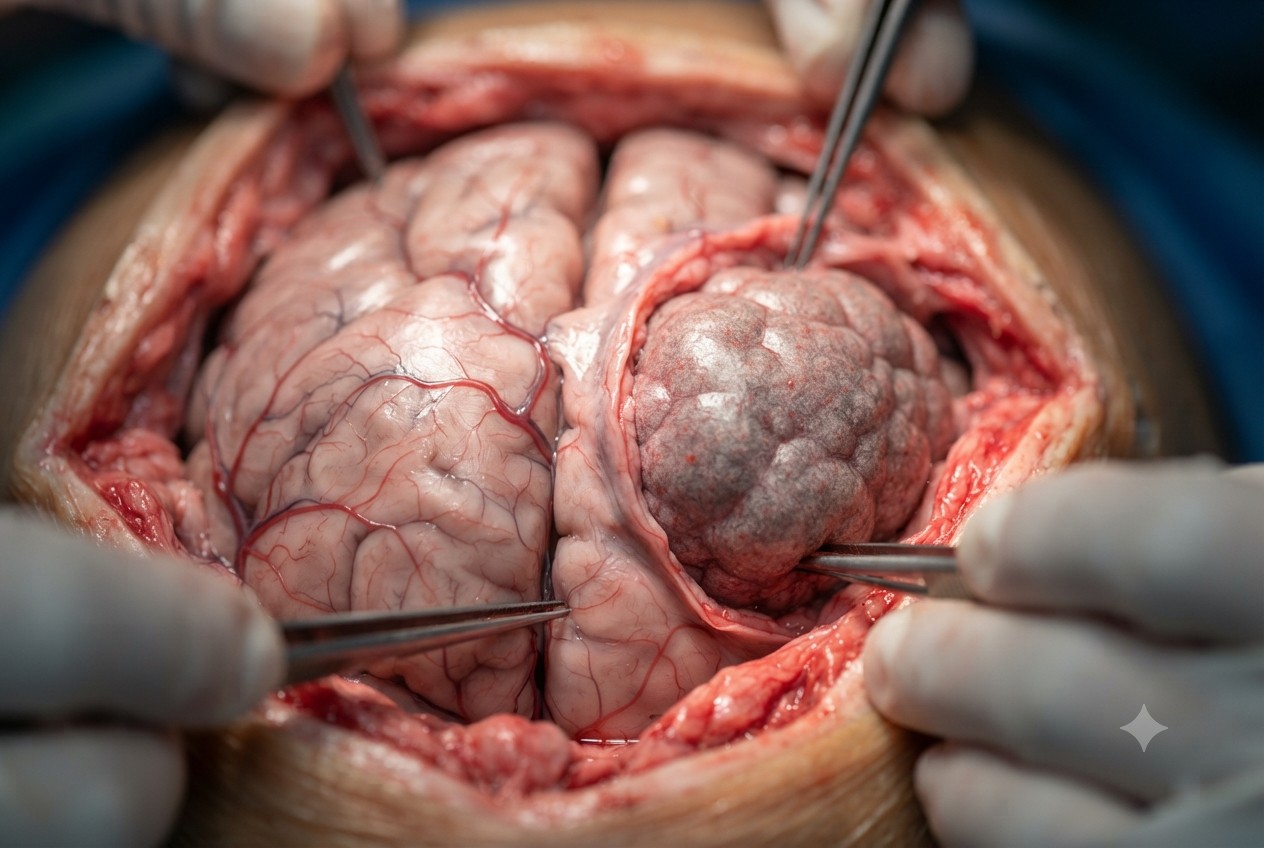
A meningioma is a tumor that forms in the meninges, the layers of tissue that cover the brain and spinal cord. Most meningiomas are not cancer (they are benign), but a few can be cancerous (malignant). Try not to worry too much, because even these cases can be treated.
This guide explains what a meningioma is, how serious it can be, how long people live with it, and how it is diagnosed and treated.
What is a meningioma?
The brain and spinal cord are covered by 3 layers of tissue called the meninges. Meningiomas form in these layers. They are usually found near the top and outer curve of the brain, or at the base of the skull. Meningiomas in the spine are very rare.
Most meningiomas are benign and do not spread to other parts of the body. Still, if one grows large enough, it can press on nearby areas of the brain and may even become life-threatening. In some cases, a meningioma is a malignant cancer that can invade other tissues and spread to other parts of the body.
Meningiomas tend to grow slowly and inward. By the time they are diagnosed, they are usually already fairly large.
What are the types of meningioma?
Meningiomas are classified in two main ways: by grade and by location and tissue type.
Types by grade
- Grade I (typical): Benign and slow growing. About 80% of meningiomas are grade I.
- Grade II (atypical): Not cancer, but they grow faster and can be harder to treat than benign tumors. They can come back after treatment. About 17% of meningiomas are grade II.
- Grade III (anaplastic): Malignant (cancer). They grow and spread quickly. About 1.7% of meningiomas are grade III.
Types by location and tissue type
- Convexity meningioma: Grows on the surface of the brain and can put pressure on the brain once it is large enough.
- Intraventricular meningioma: Grows inside the ventricles, the parts of the brain that hold cerebrospinal fluid.
- Olfactory groove meningioma: Grows near the olfactory (smell) nerve, at the base of the skull between the brain and the nose.
- Sphenoid wing meningioma: Grows along the base of the skull behind the eyes.
There are also 15 variants of meningioma, which are named for the type of cell seen under a microscope.
How long can you live with a meningioma?
Five-year survival rates are:
- Grade I tumors: 95.7%
- Grade II tumors: 81.8%
- Grade III tumors: 46.7%
Ten-year survival rates are:
- Grade I tumors: 90%
- Grade II tumors: 69%
For malignant meningiomas, 10-year survival is rising thanks to new treatments.
These figures are only estimates, and they vary from person to person. In general, the younger you are and the more completely the tumor is removed by surgery, the lower the chance that it comes back and the longer you may live.
What are the symptoms of a meningioma?
Because meningiomas grow slowly, they often cause no symptoms until they are large enough to press on nearby structures. Symptoms also differ depending on which part of the brain is affected.
Common symptoms include:
- Headache
- Dizziness
- Nausea and vomiting
- Vision changes, such as double vision, blurred vision, or loss of vision
- Hearing loss
- Seizures
- Changes in behavior or personality
- Memory problems
- Overactive or exaggerated reflexes (hyperreflexia)
- Weakness in certain muscles
- Paralysis in certain parts of the body
Some locations cause more typical symptoms:
- An olfactory groove meningioma causes partial or complete loss of the sense of smell.
- A sphenoid wing meningioma causes bulging eyes.
- A spinal meningioma causes pain, muscle weakness, reduced reflexes, and nerve root problems (radiculopathy), among other symptoms.
Is a meningioma dangerous?
A meningioma and its treatment can cause some long-term complications, including:
- Trouble concentrating
- Memory loss
- Personality changes
- Seizures
- Muscle weakness
- Difficulty with language
What causes a meningioma?
Scientists do not yet know exactly what causes meningiomas. Research has shown that 40% to 80% of cases involve an abnormality of chromosome 22, which is linked to the loss of a natural brake on tumor growth. Most of these abnormalities happen at random and are rarely inherited.
Risk factors
- Age: Meningiomas mostly affect older adults. The average age at diagnosis is 66.
- Race: Black people have a higher risk.
- Sex and hormones: Women are more likely than men to develop a meningioma, possibly because of hormone-related factors. People who have used hormone therapy or birth control pills, and people with a history of breast cancer, also have a higher risk. However, malignant (cancerous) meningiomas are more common in men.
- Radiation: Past radiation therapy to the head raises the risk.
- Medical history: A personal or family history of meningioma, neurofibromatosis type 2, von Hippel-Lindau disease, multiple endocrine neoplasia type 1, Li-Fraumeni syndrome, or Cowden syndrome raises the risk.
How is a meningioma diagnosed?
Meningiomas are often hard to diagnose early because they grow slowly and mostly affect older adults. In many cases, the symptoms are mistaken for normal signs of aging.
To make a diagnosis, a doctor will do a physical and neurological exam and order imaging tests such as:
- Brain MRI (magnetic resonance imaging) with contrast dye: This is the best test.
- CT (computed tomography) scan with contrast dye: This is used when you cannot have an MRI.
Your doctor may also order a biopsy to find out whether the tumor is benign or malignant and to identify the type of tumor.
How is a meningioma treated?
Treatment is personalized for each person and may combine several of the approaches below. Talk to your doctor about which options fit your situation.
Monitoring
Your doctor may recommend monitoring if:
- You have no symptoms and the tumor is small.
- You have few symptoms and little or no swelling in the nearby parts of the brain.
- Your symptoms are mild, the tumor has been present for a long time, and it does not affect your quality of life much.
- You are older and your symptoms are progressing very slowly.
- Treatment would carry significant risks to your health or life.
You will have MRI scans scheduled to track the size of the tumor and your symptoms. In some cases, the tumor does not grow.
How often you need an MRI depends on the person:
- Grade I: You may have an MRI once a year for up to 5 years, and then every 2 years.
- Grade II: You may have an MRI every 6 to 12 months. After 5 years, you will have one every 2 years.
- Grade III: You may have an MRI every 3 to 6 months. After 2 years, you will have one every 6 to 12 months.
Surgery
Surgery is the first choice for meningiomas that cause symptoms, or that are already large and expected to cause symptoms soon.
Removing the whole tumor can lead to recovery in 70% to 80% of people. However, it is not always possible to remove the entire tumor, for reasons such as:
- The tumor is deep in the brain.
- The tumor is attached to nearby brain tissue or veins.
- It is not certain that the operation would be safe.
Possible complications after surgery include:
- Infection and bleeding
- Swelling of the brain (edema), which can lead to brain damage
- Damage to the cranial nerves, which can affect vision, facial movement, or swallowing, depending on where the tumor is
- Damage to healthy brain tissue, which can cause problems with thinking, vision, or speaking
Radiation therapy
Radiation therapy is the first treatment for meningiomas that cannot be completely removed by surgery, or for people who cannot have surgery because of the risks. It is used for benign meningiomas as well.
Radiation can cause side effects such as:
- Mild skin reactions
- Hair loss
- Fatigue
- Changes in thinking, such as confusion and mild memory loss
- Loss of appetite
- Headache
Changes in thinking can be permanent. The other side effects are temporary and usually go away within a few weeks.
Palliative care
Palliative care focuses on helping you feel better by managing symptoms, treatment side effects, and emotional concerns. It can include:
- Medications
- Changes to your diet
- Relaxation techniques
- Emotional and mental support
- Therapy to improve nervous system function
- Steps to improve quality of life
Chemotherapy (rare)
Doctors may use chemotherapy for meningiomas that have come back or keep growing and no longer respond to surgery or radiation.
Side effects of chemotherapy vary from person to person and may include:
- Fatigue
- A higher risk of infection
- Nausea and vomiting
- Hair loss
- Loss of appetite
- Diarrhea
Can a meningioma be prevented?
There is currently no known way to prevent meningiomas.
The bottom line
A meningioma is a tumor that forms in the meninges and is the most common type of tumor in the head. Most grow slowly over many years without causing symptoms, but if one presses on nearby brain tissue, nerves, or blood vessels, it can cause serious disability. Meningiomas are more common in women and in older adults.
A meningioma does not always need treatment right away. Sometimes monitoring is enough. Surgery is the best option for many meningiomas, but not every tumor can be removed completely, and surgery carries real risks.
References
Medical disclaimer
FAQHealth content is for informational and educational purposes only. It is not a substitute for professional medical advice, diagnosis, or treatment. Always talk with your doctor or another qualified health professional about any questions you have about a medical condition.