How Pink Eye Spreads and How to Prevent It
Pink eye (conjunctivitis) spreads through close contact, droplets, and shared items. Learn how it spreads, its symptoms, and how to protect yourself and others.
On this page
Knowing how pink eye spreads, how to prevent it, and how to spot it early can help you protect yourself and the people around you, especially when the weather and seasons change.
Pink eye (conjunctivitis) often flares up and spreads from person to person when the weather is unsettled, which worries many people. To stop it from spreading, it helps to understand how pink eye spreads, what the early signs are, and what to do if you already have it.
Is pink eye contagious?
Pink eye, also called conjunctivitis, has several possible causes. Some are contagious and some are not.
Contagious causes
- Viruses: Viruses are the most common cause of pink eye. The common cold viruses and the virus that causes COVID-19 can both cause it.
- Bacteria: Common bacteria that cause pink eye include Staphylococcus aureus, Haemophilus influenzae, Streptococcus pneumoniae, and Pseudomonas aeruginosa.
Non-contagious causes
- Allergies: Allergens such as smoke, dust, pollen, pet dander, and chemicals can also cause pink eye.
- Eye injury: Rubbing your eyes too much or too hard, a foreign object in the eye, or a blow to the eye can damage the surface of the eye and cause swelling, pain, and redness.
- Contact lenses: Wearing contact lenses for too long or not cleaning them properly can make your eyes red because the cornea does not get enough oxygen.
- Dry eye: When the eyes do not have enough natural tears, they become irritated and red. This often happens with heavy computer use or working in an air-conditioned space.
When pink eye is caused by a virus or bacteria, it can spread through breathing droplets and saliva, or when a healthy person touches something carrying the germs and then touches their eyes.
How does pink eye spread?
Pink eye mostly spreads through close contact with a person who is sick or with objects that carry the virus or bacteria.
Contact with a person who has pink eye
You can catch pink eye by coming into direct contact with fluid from the eyes or tears of someone who is infected. You can also catch it by touching the hands or belongings of an infected person, which gives the virus or bacteria a chance to spread.
Contact with droplets and secretions
When a person with pink eye sneezes or coughs, droplets of saliva that carry the germs can reach a healthy person and infect them.
Sharing objects with an infected person
Touching objects such as doorknobs, elevator buttons, and toys that carry the virus or bacteria can also put you at risk. Sharing personal items such as towels, washcloths, bedding, pillows, cups, and bowls with a person who has pink eye also lets the germs pass easily from one person to another.
Close or intimate contact
Close physical contact, such as hugging and kissing during sex, can allow the virus or bacteria to pass easily from a person who is sick to a healthy person.
How can you prevent pink eye from spreading?
There are many ways to prevent pink eye and stop it from spreading when the seasons change and the weather is unsettled.
If you are healthy
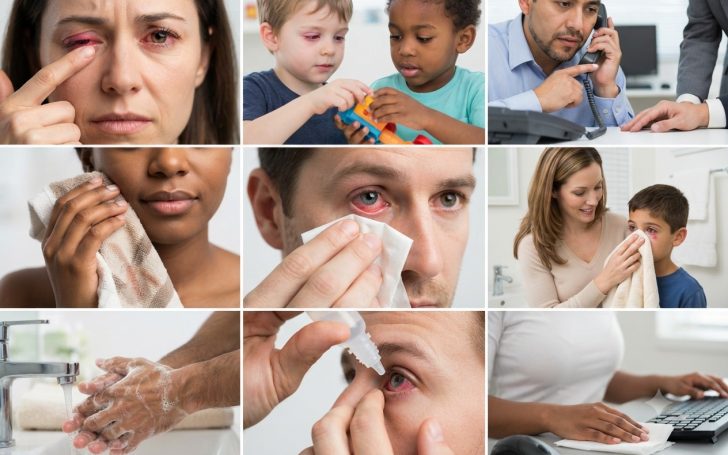
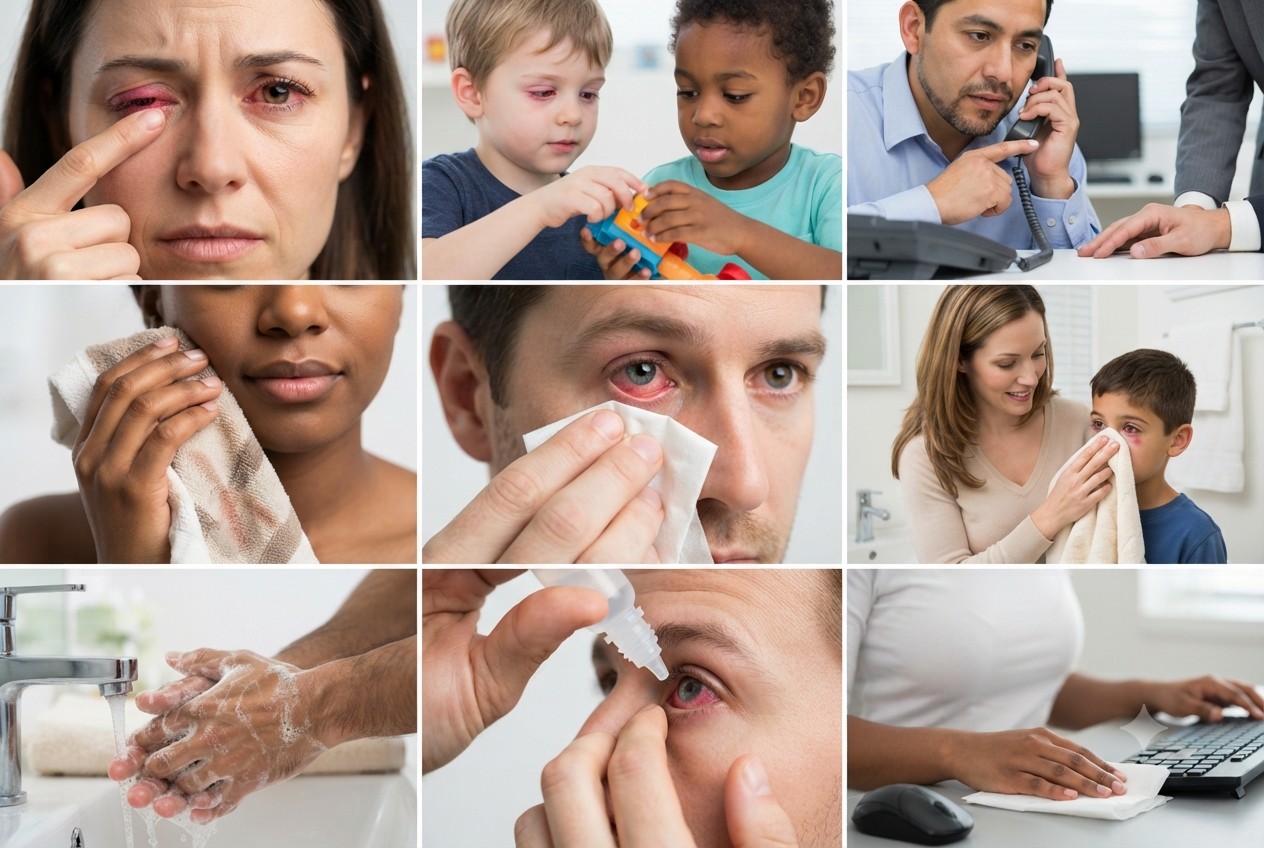
- Practice good personal hygiene and wash your hands with soap often, especially before eating and after touching shared objects such as doorknobs and elevator buttons.
- Avoid sharing personal items such as bath towels, face towels, and wash basins with other people.
- Wash towels with soap and clean water, and dry them in a place with plenty of sunlight, which helps kill some of the germs that cause disease.
- Try not to rub your eyes with your hands, so the virus that causes pink eye has less chance to spread.
If you have or may have pink eye
If you have pink eye, you can help keep it from spreading to others by doing the following:
- Wash your hands often with soap, or use hand sanitizer or an antiseptic solution.
- Rinse your eyes with saline solution (physiological saline) at least 3 times a day: morning, noon, and night.
- Do not share eye drops, face towels, bedding, or pillows with healthy people.
- Limit contact with healthy people and avoid crowded places, so you do not spread the germs.
- Wear sunglasses to reduce your eyes’ exposure to light and to help you avoid rubbing them, which lowers the chance of spreading the infection.
- See a doctor as soon as you notice symptoms of pink eye so you can be treated promptly, and do not use unproven folk remedies.
What are the symptoms of pink eye?
If you can recognize the symptoms of pink eye early, you can take steps right away to stop it from spreading, which also helps protect the health of others. Signs of pink eye include:
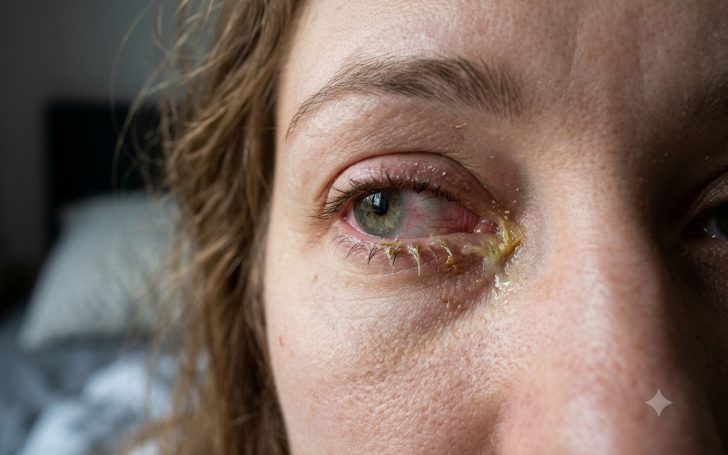
- Red or pink eyes. When the white of the eye (the conjunctiva) is inflamed, the tiny blood vessels on its surface widen, which turns the eye pink or red. This is the common symptom of conjunctivitis, often called “pink eye.”
- Constant watery eyes that you cannot control
- Heavy crusting on the eyelids and eyelashes, especially after you wake up
- Sometimes green or cloudy white discharge from the eye
- Discomfort in one or both eyes
- Itching or a gritty, burning feeling in the eyes
- Blurred or limited vision
- More sensitivity to light and wind
- Swollen eyelids
Can you catch pink eye by looking at someone’s eyes?
Many people wonder whether pink eye can be caught just by looking at someone, because of a folk belief that the disease spreads when you look into the eyes of a person who has it. According to science, however, pink eye does not spread by looking into someone’s eyes. It spreads through:
- Contact with fluid from a person who is sick, such as eye discharge, tears, and saliva
- Coughs and sneezes that send saliva and nasal fluid into the air, which lets the virus or bacteria easily enter the body of a healthy person
- Contact with a person’s personal items, such as bath towels, drinking cups, face towels, and bowls and chopsticks
- Sexual contact with a person who is sick, which brings you into contact with their secretions
- Touching shared objects such as doorknobs, elevator buttons, and stair railings that carry the bacteria or virus
Can pink eye come back?
People who have had pink eye can get it again, more than once. This is especially likely when the weather or the season changes. There is currently no vaccine to prevent pink eye, and no single medicine that works for every case, so it is important to see a doctor for treatment that fits the cause.
The bottom line
Understanding how pink eye spreads helps you protect yourself and also helps limit its spread in your community. Avoiding direct contact, not sharing personal items, and washing your hands often are small actions that go a long way toward protecting your own health and the health of others.
References
Medical disclaimer
FAQHealth content is for informational and educational purposes only. It is not a substitute for professional medical advice, diagnosis, or treatment. Always talk with your doctor or another qualified health professional about any questions you have about a medical condition.