Eye Discharge When You Wake Up: Causes, When to Worry, and Treatment
Waking up with eye discharge is usually harmless, but it can signal an infection. Learn the causes, warning signs, and how to clear it safely at home.
On this page
If you wake up with a lot of eye discharge, you may wonder why it happens and whether it is a cause for concern. Eye discharge looks different from person to person, depending on what is behind it.
This guide explains what causes eye discharge in the morning, when it is a warning sign, and how to clear it and keep it from coming back.
How does eye discharge form?
When you are awake, the tear film keeps your eyes moist and healthy. Blinking sweeps away the normal mucus made by the conjunctiva (the thin clear layer over the white of the eye), oil from the meibomian glands (oil glands in the eyelids), skin cells, and dust from the front surface of the eye.
When you sleep, your eyes are closed and you don’t blink. Tears and the substances above collect in the corners of your eyes and along the lash line, then dry out. This is eye discharge, also called sleep or eye crust. It can be sticky and wet, or hard and brittle.
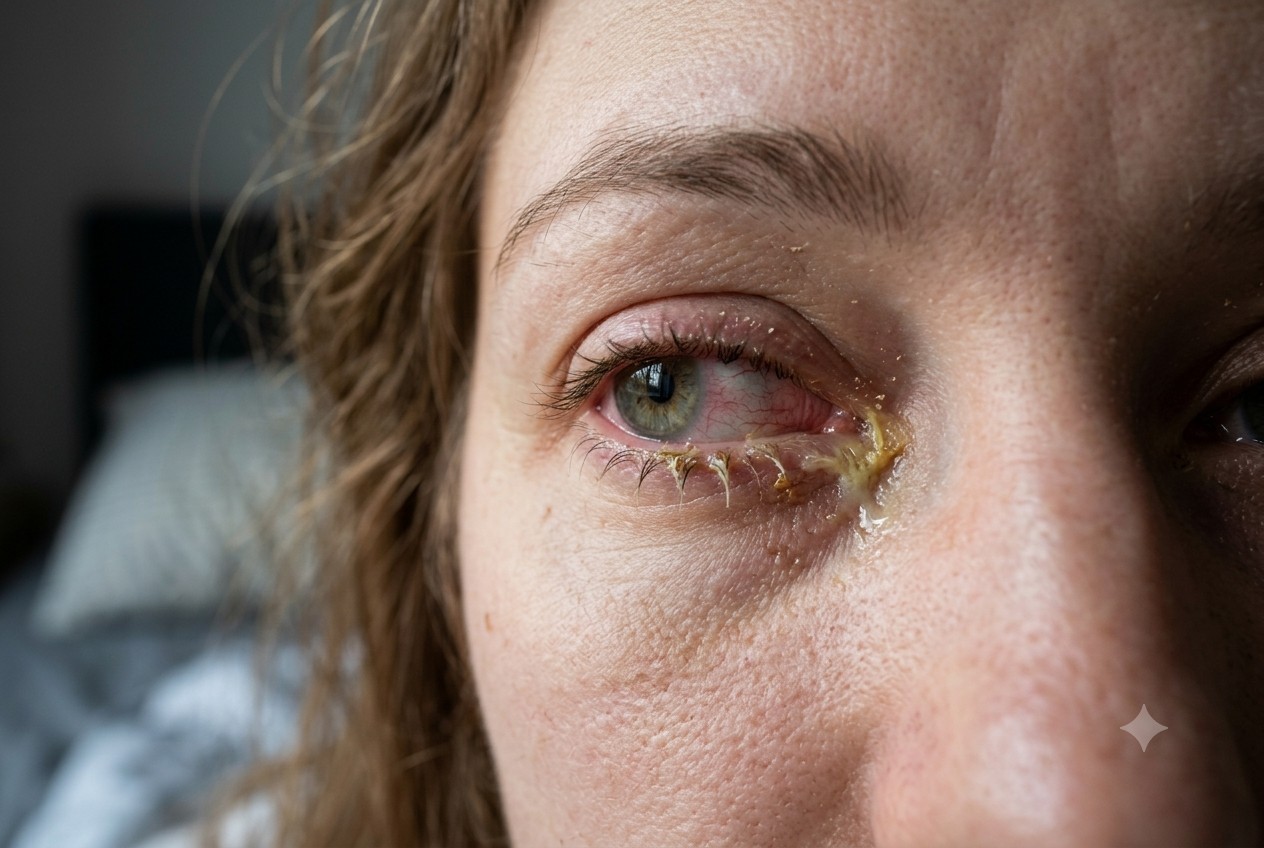
Everyone wakes up with eye discharge at some point, and it is usually harmless. It may be yellow, hard, and brittle; clear and sticky; or thin and watery like tears.
When is heavy eye discharge in the morning a concern?
Sometimes eye discharge is not the normal buildup of sleep. It can be a warning sign of an eye infection or another eye problem. Be careful if you notice any of these:
- Heavy discharge when you wake up that is green, yellow, or white
- So much discharge that your eyelids stick together and it is hard to open your eyes
- Blurry vision
- Sensitivity to light
- A red or swollen eye
- Eye pain
If you have any of these, see a doctor as soon as possible.
What causes eye discharge when you wake up?
Many things can cause heavy eye discharge in the morning. The most common causes are:
- Blepharitis: inflammation of the eyelids.
- Stye: a bump on the eyelid caused by a blocked oil gland, which leads to swelling, redness, and pain.
- Viral or bacterial eye infection.
- Eye injury.
- Corneal ulcer: an inflamed, open sore on the cornea, the clear layer that covers the colored part of the eye.
- Allergies: when something irritates your eyes, you may have wet discharge or a lot of discharge in the morning, along with itchy eyes. Your eyes make more mucus to wash away the allergens.
- Dry eye: this can make your eyes water or produce stringy, mucus-like discharge. Drinking a lot of alcohol the evening before can also cause dry eyes in the morning.
- Pink eye (conjunctivitis): the layer covering the white of the eye becomes inflamed, which makes the blood vessels red and swollen and the eye look bloodshot. You will often wake up with a lot of discharge. The type of discharge depends on the type of pink eye:
- Bacterial conjunctivitis: gray, yellow, or green discharge. Discharge can glue the eyelids and lashes together, so it is hard to open your eyes in the morning.
- Viral conjunctivitis: watery eyes, with white or yellow discharge.
- Allergic conjunctivitis: watery eyes or stringy discharge.
Eye discharge in babies and young children
In infants and young children, eye discharge after waking up can be caused by a blocked tear duct, or because they can’t yet clean their eyes properly. Children also touch their eyes out of curiosity, which can lead to infection.
Take your child to a doctor to find the exact cause and, if needed, get the right medicine. It also helps to keep your child’s surroundings clean to stop germs (bacteria and viruses) from spreading.
How do you treat eye discharge in the morning?
If you have seen a doctor and the cause has been diagnosed, treatment depends on that cause. For example:
- Eye discharge from a bacterial infection may be treated with antibiotics.
- Allergic eyes may be treated with cold compresses and antihistamines.
- A viral infection may be treated with antiviral medicine.
- In a few rare cases, when medicine does not work as hoped, surgery may be needed.
You can also clear morning eye discharge at home by following the steps below.
How to clean your eyes at home
The most important rule is to wash your hands with soap and water both before and after you clean your eyes. Never rub your eyes when you wake up or at any other time of day. Your hands can carry bacteria and viruses that infect your eyes and make the discharge worse.
To remove the discharge:
- Soak a soft, clean cloth in warm water. Don’t use hot water, because it can damage the thin, delicate skin of your eyelids and around your eyes.
- Place the warm cloth on your eyelids and lashes for 2 to 3 minutes.
- Wipe the discharge away very gently.
If your eye discharge is due to pink eye and only one eye is affected, use a separate clean cloth for each eye. This keeps the infection from spreading from one eye to the other.
How can you prevent eye discharge from coming back?
The best thing you can do for your eyes is to take care of them properly. These habits can help:
- Gently rinse your eyes with clean water.
- Avoid too much sun exposure to your eyes.
- Limit the time you spend on electronic devices.
- Avoid rubbing your eyes.
- Wash your hands often with soap and clean water, and always before you touch your eyes.
- Wear a sleep mask when you sleep, if needed.
- Quit smoking and don’t drink a lot of alcohol.
- Drink plenty of water to help prevent dry eyes.
Have regular eye exams too, especially if you are older.
The bottom line
Eye discharge in the morning is usually harmless, but it can sometimes point to an infection or another eye problem. Keep the warning signs above in mind, and see a doctor if you notice them. Proper treatment and eye care are the best way to protect your vision.
References
Medical disclaimer
FAQHealth content is for informational and educational purposes only. It is not a substitute for professional medical advice, diagnosis, or treatment. Always talk with your doctor or another qualified health professional about any questions you have about a medical condition.