Spoiled Food: Health Risks and What to Do If You Ate It
Eating spoiled food can cause food poisoning and, rarely, serious complications. Learn the warning signs, what to do first, and when to get medical help.
On this page
Hot, humid weather is ideal for bacteria and mold to grow on food. Spoiled food is a constant threat to the health of every household.
The World Health Organization (WHO) estimates that about 600 million people get sick each year after eating contaminated food, and 420,000 people die.
Knowing why you should not eat spoiled food and how to spot the early signs of food poisoning is key to protecting yourself and your family.
How dangerous is spoiled food?
Spoiled food is more than a change in smell, taste, or color. It is a sign that the food may be contaminated with disease-causing germs that can be extremely dangerous.
Bacteria and viruses
Food that is left out too long or stored the wrong way is often contaminated with bacteria such as Shigella, Salmonella, Campylobacter, Escherichia coli (E. coli), Clostridium, Bacillus cereus, Staphylococcus aureus, and Listeria, as well as some parasites. These germs can cause symptoms ranging from mild, such as diarrhea, to severe, such as sudden kidney failure, severe fluid loss (dehydration) and an imbalance of body salts (electrolytes), or a bloodstream infection (sepsis). They can also cause death.
Listeria monocytogenes is a special concern. It can cause miscarriage in pregnant women and death in newborns.
Toxins, mold, and chemicals
Toxins can make the intestines release more fluid and can act on the nerves of the gut, which leads to digestive upset.
Live bacteria are not the only problem. The toxins they produce (for example, those from Staphylococcus aureus and Bacillus cereus) can also cause poisoning quickly. Viruses such as norovirus and rotavirus can make people sick fast as well.
Mold is another danger. Mold on nuts or grains can produce toxins called mycotoxins (such as aflatoxin from Aspergillus mold). These can cause vomiting and stomach pain. With long-term exposure, they may cause cancer or affect the immune system and the normal development of children.
Serious complications
Food poisoning from spoiled food can lead to complications that are rare but severe, such as:
- Sudden kidney failure: E. coli can cause hemolytic uremic syndrome (HUS), which leads to sudden kidney failure.
- Nerve damage: Clostridium botulinum can cause muscle paralysis and trouble breathing.
- Sepsis (a bloodstream infection): Bacteria that get into the intestines can pass through the cells that line the lymphatic tissue of the gut, which is part of the immune barrier that protects the intestines. From there, they enter the blood and cause sepsis.
What are the early signs of food poisoning?
Symptoms of food poisoning can appear within a few hours or a few days after eating. Typical signs include:
- Digestive symptoms: Stomach pain, stomach cramps, nausea, and vomiting.
- Diarrhea: Loose stools, sometimes with mucus and blood.
- Whole-body symptoms: Fever, tiredness, headache, muscle and joint pain, respiratory symptoms, or a rash.
- Nerve symptoms (less common): Dizziness, headache, blurred or double vision, drooping eyelids, muscle weakness, numbness or tingling of the skin, or loss of the ability to move the arms and legs. With Clostridium botulinum, paralysis of the breathing muscles can cause trouble breathing.
In children, vomiting and diarrhea can quickly lead to severe dehydration. Signs include thirst, sunken eyes, dry skin, urinating less, weakness or fussiness, and unusual sleepiness.
What should you do if you ate spoiled food?
If you think you or a family member ate spoiled food, take these steps:
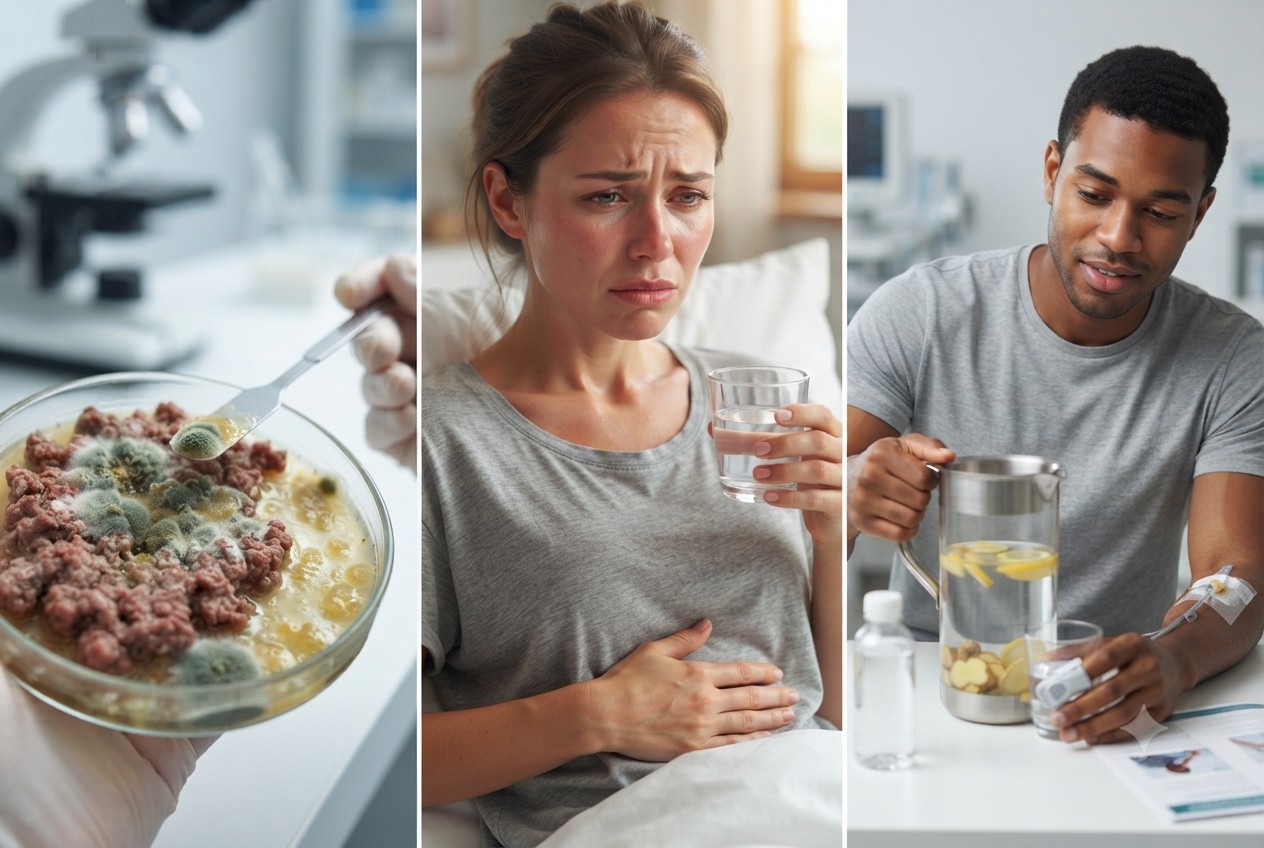
- Watch closely. Most mild cases of food poisoning get better on their own without treatment. Rest and drink plenty of fluids.
- Replace fluids and electrolytes. This is the top priority to prevent dehydration from vomiting and diarrhea.
- Do not take anti-diarrhea medicine on your own. With some kinds of food poisoning, diarrhea is the body’s way of getting rid of the toxins. Talk to your doctor before taking anti-diarrhea medicine.
When should you get medical help right away?
Call 911 (or your local emergency number) or go to the nearest emergency room (ER) if any of these signs appear:
- In children: A change in consciousness, no urination, diarrhea lasting more than one day, blood or pus in the stool, or a high fever above 101.3°F (38.5°C).
- In adults: Diarrhea lasting more than 2 days along with a fever above 102.2°F (39°C) that does not go down, or any of these symptoms: bloody, mucus-filled stools, blurred vision, muscle weakness, or signs of dehydration such as a dry mouth, thirst, dizziness, and passing little urine.
Which foods spoil most easily in hot weather?
These foods need extra care when you store them in hot weather:
- Rice and grains: Bacillus cereus often grows quickly in rice that sits at room temperature for too long.
- Meat, poultry, and eggs: These are common sources of Salmonella and E. coli if they are not cooked thoroughly or are left out for more than 2 hours.
- Seafood: Shellfish (such as clams) can contain natural toxins or Vibrio cholerae bacteria from polluted water.
- Milk and ready-to-eat foods made from unpasteurized milk: These can carry Listeria, which can grow even at refrigerator temperatures. Examples include canned or packaged meat, soft cheese, and raw milk.
- Salads and cream-filled pastries: Egg salad, potato salad, and cakes with cream filling become a breeding ground for Staphylococcus aureus if they are not kept cold.
Frequently asked questions
Can you cut off the moldy part and eat the rest?
For soft foods such as tomatoes, juicy fruit, bread, or nuts, throw out the whole item. Mold can spread deep inside, where you cannot see it.
For hard foods such as carrots or hard cheese, you can cut off the moldy part. Look closely and cut away at least 1 inch (2.5 cm) around it before you use the rest.
How long can cooked food stay in the refrigerator?
It is best to divide food into portions before serving so that you do not have leftovers. Put leftovers in small, shallow containers with tight lids so they cool quickly, and store them in the refrigerator at 34°F to 39°F (1°C to 4°C) for 3 to 4 days. As noted above, food left out for more than 2 hours is a common source of food poisoning, so throw away leftovers that have sat out that long instead of reheating them.
If you do not plan to eat the food within that time, freeze it right away.
How can you tell if food is still safe when it smells fine?
The key rule is: “When in doubt, throw it out.” Food can look and smell fine and still be contaminated with bacteria or contain toxins that cause illness.
Who should completely avoid raw or undercooked foods?
Pregnant women, children, older adults, and people with weakened immune systems should not eat undercooked meat, raw fish, raw eggs, raw sprouts, or unpasteurized milk. The risk of food poisoning that can be life-threatening is too high.
Does rinsing meat under the tap remove bacteria?
No. Washing raw meat can actually spread bacteria to other kitchen surfaces, cooking tools, and other foods. The best way to kill bacteria is to cook food thoroughly.
Also, use separate utensils for raw and cooked food while you prepare meals to prevent cross-contamination.
The bottom line
Why should you not eat spoiled food? Because carelessness can cost you your health and even your life. Follow the WHO’s “5 keys to safer food”: keep clean, separate raw and cooked food, cook food thoroughly, keep food at safe temperatures, and use safe water and raw materials.
References
Medical disclaimer
FAQHealth content is for informational and educational purposes only. It is not a substitute for professional medical advice, diagnosis, or treatment. Always talk with your doctor or another qualified health professional about any questions you have about a medical condition.