Exercising Before Bed: Is It Good or Bad for Your Sleep?
Does a workout at night keep you awake? Learn what research says about exercising before bed, which workouts to choose, and when to finish.
On this page
Many people wonder whether it is a good idea to exercise before bed. Regular exercise can help your body relax, ease anxiety, and support your body clock (circadian rhythm). It can also make it easier to fall asleep.
Several studies have found that exercising close to bedtime does not harm sleep quality. What matters is getting the timing right and choosing the kind of exercise that won’t get in the way of your sleep. This guide covers what the research says about exercising before bed, which workouts to pick, and other habits that help you sleep better.
Is it good to exercise before bed?
Some recent research suggests that exercising very late in the evening can disrupt sleep. Studies of moderate-intensity exercise, however, found that it did not.
In one 2020 study, 12 healthy men came to a laboratory on 3 different nights. On one night they did 30 minutes of moderate-intensity aerobic exercise, on another 30 minutes of moderate resistance exercise, and on the third night no exercise at all. The men then slept in the lab, and the researchers measured their body temperature and sleep quality. They concluded that evening exercise at a moderate intensity did not affect the participants’ sleep quality.
Another 2020 study found similar results. Sixteen men and women did moderate-intensity exercise at different times, such as 2 to 4 hours before bed. The scientists found that evening exercise did not affect the participants’ ability to sleep.
A 2019 review also found that moderate evening exercise may help improve sleep, and that it should end 1 hour before bed.
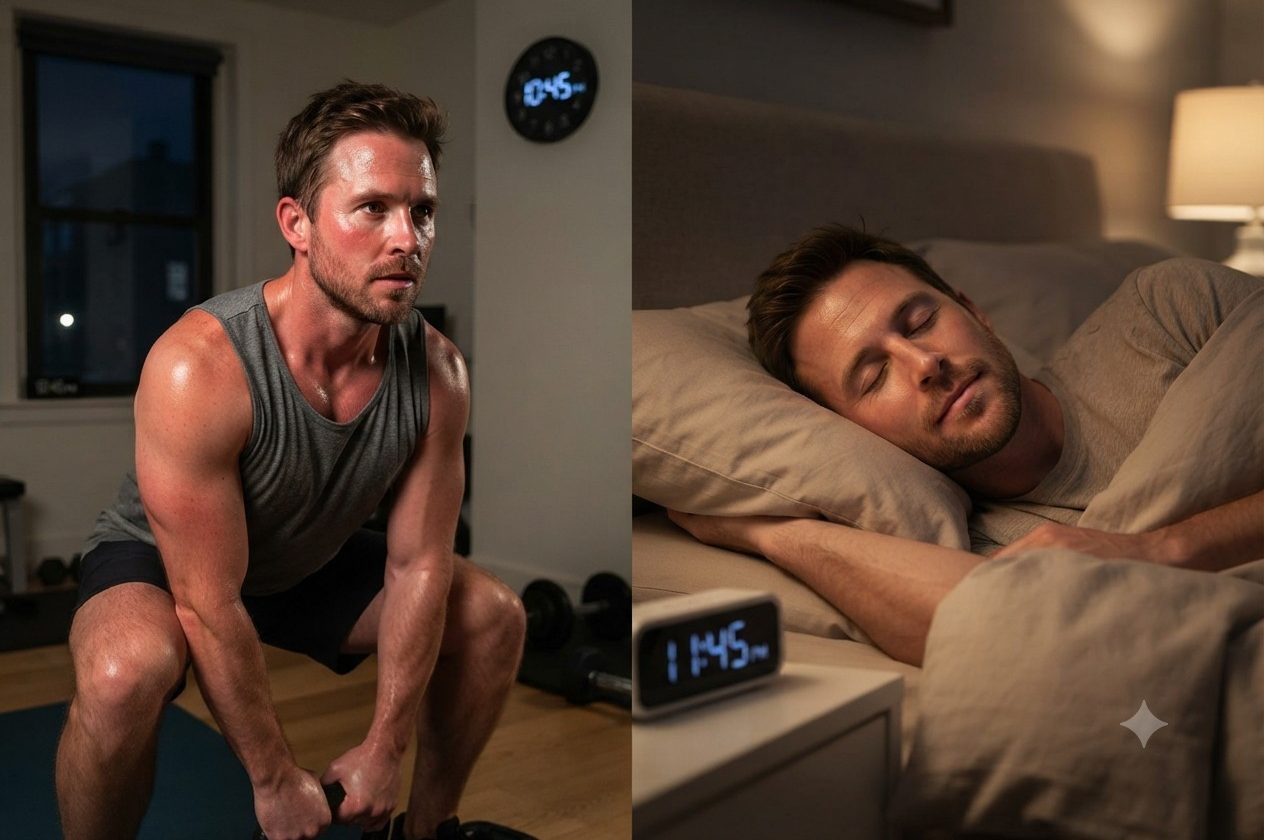
Based on these studies, moderate-intensity exercise within 60 to 90 minutes of bedtime should not affect how well you sleep.
Which exercises are best before bed?
Not all workouts affect sleep in the same way. That is why it helps to choose the right type of exercise and to time it carefully.
If you plan to exercise at night, light to moderate activity is best. With the right intensity, you may fall asleep faster and sleep better.
Also finish your workout at least 1 to 1.5 hours before bed, so your body has time to fully relax. These light to moderate activities may help you sleep more deeply:
- Yoga
- Stretching
- Walking
- Swimming
- Cycling
- Weightlifting (light to moderate intensity)
Which exercises should you avoid at night?
Avoid vigorous workouts and overly strenuous activity in the evening. They can stimulate the nervous system and push your heart rate too high, which makes it harder to fall asleep.
These high-intensity workouts can make it harder to sleep, so skip them at night:
- High-intensity interval training (HIIT)
- Running
- Jumping rope
- Bike racing
- Heavy weightlifting
What is the best amount of exercise for good sleep?
To improve your sleep, try to get at least 30 minutes of moderate-intensity aerobic exercise during the day or in the evening. Regular exercise is also important to help keep your sleep from being interrupted. For that reason, aim for about 150 minutes of moderate aerobic exercise a week. For example, you can spread it out as 30 minutes on 5 days each week.
If you can’t fit in 30 minutes at once, you can split it into two 15-minute sessions a day, 5 days a week. If you often do vigorous exercise, aim for at least 75 minutes a week. As noted above, you should still avoid vigorous workouts within a few hours of bedtime.
Choose an activity you enjoy and that suits your fitness level. That will help you stay motivated and exercise regularly.
What other habits help you sleep better?
Besides staying physically active, you can change a few habits to improve your sleep quality:
- Keep a consistent sleep schedule. Go to bed and wake up at the same time every day, including weekends and holidays. A steady routine helps keep your body clock stable.
- Stay away from electronics before bed. Turn off the TV, smartphone, computer, and other devices at least 30 minutes before bed. The light from these devices can stimulate your brain and keep you alert, making it harder to sleep.
- Build a relaxing bedtime routine. A warm bath, soothing music, or some yoga poses, stretching, or meditation before bed can help you sleep better.
- Reduce noise. Use a fan, an air conditioner, or a white noise machine to cover sounds that could keep you awake.
- Sleep at a comfortable temperature. The ideal bedroom temperature for sleep is about 65°F (18.3°C).
- Make your bed comfortable. Make sure your mattress and pillows are comfortable and the right shape for you.
- Don’t eat large meals right before bed. Avoid heavy meals within a few hours of going to bed. If you still feel a little hungry, a light snack such as toast or fruit is fine.
- Avoid nicotine, alcohol, and caffeine before bed. These substances can make it harder to fall into a good, restful sleep.
- Keep naps short. Avoid napping longer than 20 to 30 minutes, especially in the afternoon, because it can disrupt your body clock. Napping longer than that can make it harder to fall asleep at night.
The bottom line
Recent studies suggest that moderate-intensity exercise does not affect sleep if you finish about 1 hour before bed. On the other hand, overly strenuous activity before bed, such as running, high-intensity interval training (HIIT), and heavy weightlifting, can hurt your sleep.
Everyone’s health and fitness are different, so adjust the timing and intensity of your workouts to what works best for you.
References
- Exercising for better sleep — Johns Hopkins Medicine
- Does exercising at night affect sleep? — Harvard Health
- Sleep tips: 6 steps to better sleep — Mayo Clinic
- Measuring physical activity intensity — CDC
- Research notes: 5 surprising facts about exercise and sleep — American Academy of Sleep Medicine
- What's the best time of day to exercise for sleep? — Sleep Foundation
- How to sleep better — HelpGuide
Medical disclaimer
FAQHealth content is for informational and educational purposes only. It is not a substitute for professional medical advice, diagnosis, or treatment. Always talk with your doctor or another qualified health professional about any questions you have about a medical condition.