Light Sensitivity and Sleep: Effects and How to Cope
Light at night can disrupt your body clock, melatonin, and sleep cycles. Learn how light sensitivity affects sleep and simple ways to sleep better in the dark.
On this page
Light sensitivity means having little or no tolerance for light, whether it comes from the sun or from artificial sources. It can hurt the quality of your sleep, and poor sleep in turn lowers your quality of life.
This guide explains how light affects your sleep, what signs to look for, and what you can change in your bedroom to sleep better.
How does light affect your sleep?
Any kind of light can have a big effect on your sleep. Here are the main ways.
Light can disrupt your body clock
Your body clock, also called your circadian rhythm, is your body’s 24-hour cycle. It helps your body time its activities. The brain controls this rhythm by sending signals that keep it on schedule, and the brain itself reacts strongly to light.
If you sleep with light around you, cells in the retina can sense it and send a false message to the brain that it is daytime. The brain then signals the rest of the body to run on its daytime schedule.
Your body clock stays closely matched to day and night only when you get natural light: waking in the morning and sleeping at night. In modern life, electric lights add many sources of light that affect the brain’s timekeeping system. Disrupted body clocks can be linked to depression and other long-term health problems.
Light can affect the hormone melatonin
Melatonin is a hormone your body makes naturally. In darkness, the pineal gland in the brain makes melatonin automatically. Light slows this process down or stops it. As melatonin levels rise, you feel sleepier, which is how this hormone helps you fall asleep.
When melatonin is released on schedule with your body clock, it also helps you keep a steadier and more effective sleep schedule. For some people with sleep problems, including body clock disorders, synthetic melatonin, some supplements, and a suitable diet may help adjust sleep. Talk to your doctor before taking melatonin or any other supplement.
Light can disrupt your sleep cycles
Not everyone has the same sleep cycles. In general, a person goes through four to six sleep cycles during a night’s sleep, and each cycle lasts 70 to 120 minutes. These cycles include both rapid eye movement (REM) sleep and non-REM sleep.
Light at night can interfere with the shift from one sleep cycle to the next and lower your sleep quality. Too much light can wake you up or break up your sleep, which can lead to insomnia (trouble falling or staying asleep).
Light and jet lag
Jet lag is a temporary sleep disorder caused by a change in time zones. A long flight or a long work trip shifts your body clock, and the time difference makes it hard to sleep. To cope with jet lag, get light and avoid light at specific times of day so that your body clock can adjust.
What are the signs of light sensitivity affecting your sleep?
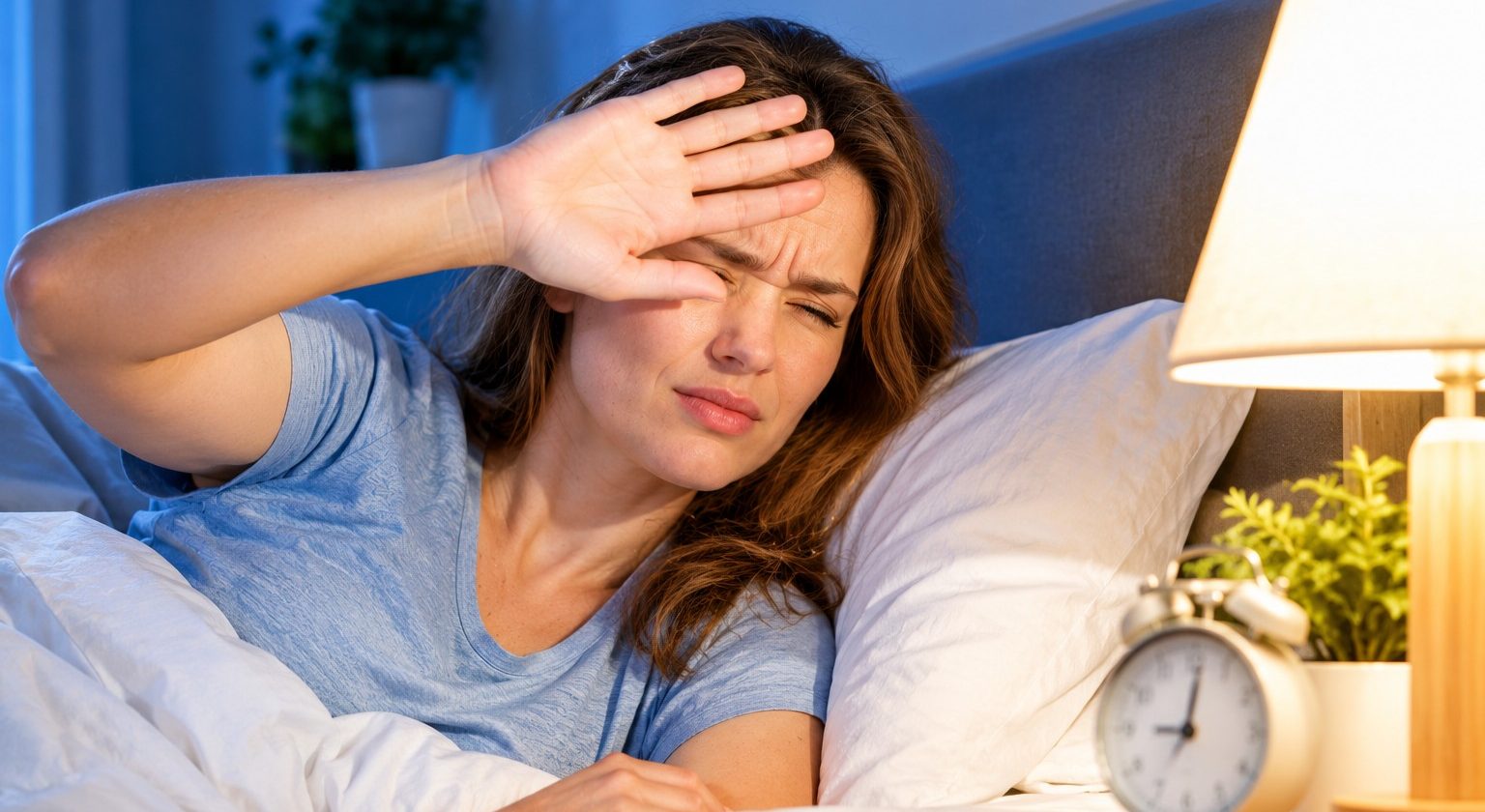
When light sensitivity keeps you from sleeping for a long time, you may become more irritable and more sensitive to light (photophobia). After a long stretch of poor sleep caused by light sensitivity, you may notice:
- Headache
- Nausea
- Irritability
Light sensitivity can also hurt your body clock and lower your mental well-being. For example, people who live where winter days are short tend to be more prone to seasonal depression (seasonal affective disorder).
Sleep disrupted by light sensitivity may also raise the risk of long-term problems, including headaches, heart and blood vessel disease, and memory decline such as Alzheimer’s disease. It can also reduce your productivity and concentration.
Which types of light affect sleep?
Light in general has some effect on sleep, but each type has a different level of impact. Daylight can reach up to 10,000 lux (a unit that measures the strength of light), far brighter than electric lighting, which rarely reaches about 500 lux. That is why daylight has such a strong effect on your sleep and body clock.
Artificial lights, such as electric lamps, differ in brightness and wavelength, and these differences change how the eyes and brain take in the light. For example, blue light has a short wavelength and comes from many LED lights. Some research suggests that short-wavelength light harms melatonin and the body clock more than longer-wavelength light does. Using many electronic devices in the evening, including cell phones, tablets, and laptops, which give off blue light, can cause sleep problems.
Why should you sleep in the dark?
Research shows that simply closing your eyes is not enough, because your eyelids do not block all light. When your eyes are sensitive to light, your body clock can be affected even by low levels of indoor light. Possible effects include:
- Eye strain: Even a low level of light in the bedroom during sleep can cause eye strain. Your eyes may feel tired, sore, or uncomfortable, and you may have trouble concentrating.
- Weight gain: Light sensitivity and light in the bedroom can disrupt your sleep and your body clock, which may raise the risk of weight gain. In one study, women who often slept with a light or the TV on had gained more than 10 lb (4.5 to 5 kg), even after they later watched their diet and exercised.
- Cancer risk: Research has linked frequently sleeping under bright artificial light at night to a higher risk of breast cancer and prostate cancer.
How can you sleep better if you are sensitive to light?
To cope with light sensitivity and sleep better, take a closer look at your bedroom:
- Use curtains that block most of the light from outside.
- At first, you can use a small low-power night light. Warm-colored light can help you relax and ease slowly into sleep.
- Limit device use at bedtime. Scrolling on a smartphone or computer stimulates your mind and delays bedtime. If you can, keep electronic devices out of the bedroom so message alerts do not wake you. Many phones have a night mode that reduces blue light, but that light can still affect your sleep.
- If a roommate stays up late with the lights or TV on while your light-sensitive eyes make it hard to sleep, you can wear a sleep mask and try Vipassana meditation before bed.
- If you sleep with a light on because you are afraid of the dark, you can set the light to its lowest level. You can also use a light with a timer: a small light helps you fall asleep, and it switches off once you are fully asleep. If your fear of the dark is severe, see a mental health professional for help.
- Bathroom lights: Many older adults leave the bathroom light on to avoid tripping on the way to the toilet at night. Instead of keeping a bright light on all night, you can use a low-level motion-sensor light in the hallway or bathroom that comes on only when needed.
What about naps?
In general, sleeping in the dark is better for your health. For a nap, however, you may want a little light so you do not sleep too deeply or for too long. A short nap can also help you regain energy and feel more alert for afternoon activities. A nap of less than 30 minutes is a good length.
The bottom line
Light sensitivity affects not only your sleep quality but also your mental and physical health, through a disrupted body clock, tiredness, and irritability. Looking after your sleep is an important part of a healthy and happy life.
References
Medical disclaimer
FAQHealth content is for informational and educational purposes only. It is not a substitute for professional medical advice, diagnosis, or treatment. Always talk with your doctor or another qualified health professional about any questions you have about a medical condition.