Breast Pain Before Your Period vs. Early Pregnancy
Breast pain before your period and in early pregnancy can feel alike. Learn the key differences in timing, feel, and breast changes, plus other causes.
On this page
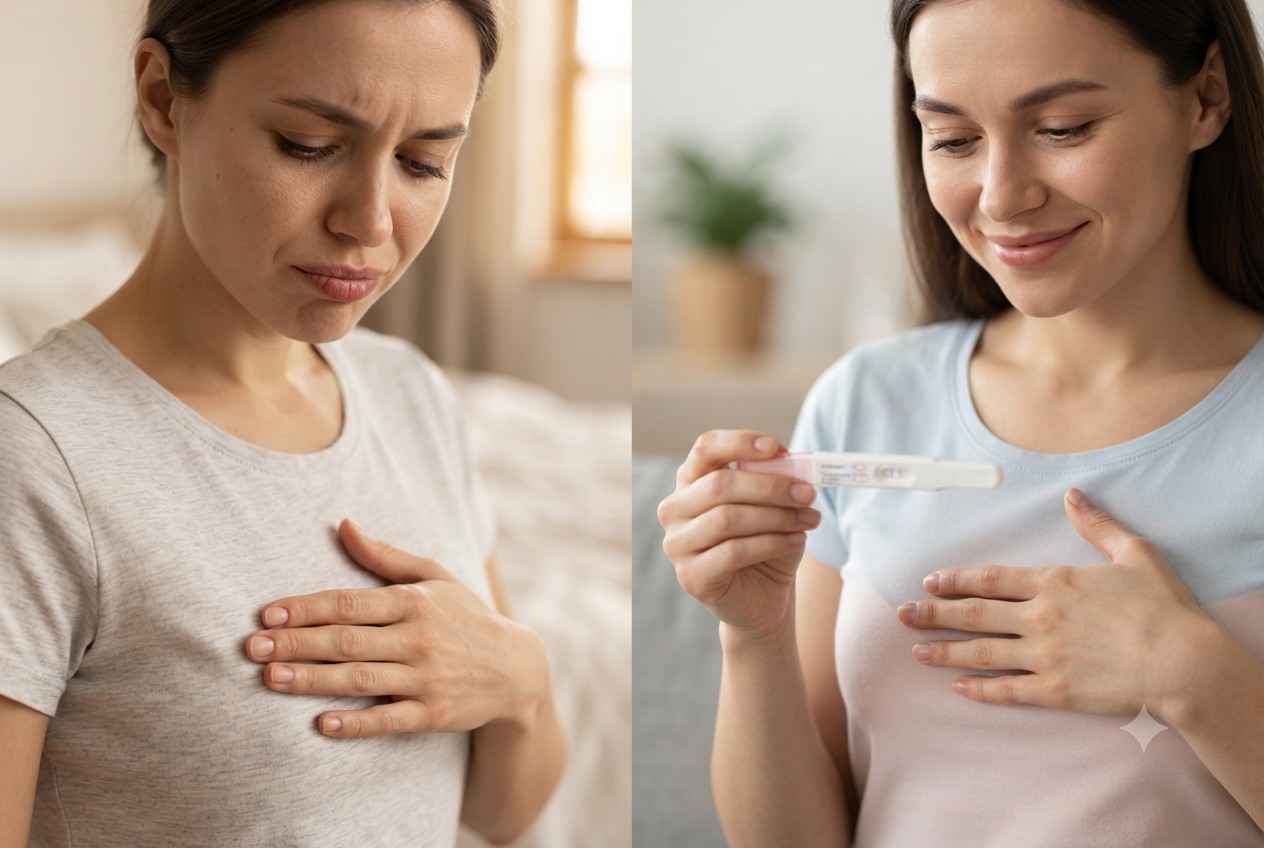
Changes in the breasts are often the first sign that hormone levels are shifting. But premenstrual syndrome (PMS) and early pregnancy cause very similar symptoms, so it is easy to mix them up. Knowing the difference between breast pain before your period and breast pain in early pregnancy can ease your mind and help you take the right care of yourself.
This guide explains how each type of pain feels, what causes it, and which other signs come with it, so you can better understand what is going on in your body.
How can you tell breast pain before your period from breast pain in pregnancy?
The main difference is how strong the pain is and how long it lasts. Breast pain linked to your period usually eases once your period starts. Breast pain linked to pregnancy usually lasts longer, gets stronger over time, and comes with clear changes in the areola, such as darker color or more visible veins.
Both types of pain are linked to rising levels of hormones such as estrogen and progesterone. But they tend to show up in different ways.
Breast pain before your period (PMS)
- Timing: It usually happens in the second half of the menstrual cycle, about 1 to 2 weeks before your period.
- How it feels: Your breasts feel tender, full, and heavy, with a dull ache. The breast tissue may feel lumpy or denser, especially toward the outer part of the breast near the armpit.
- How it progresses: The pain usually peaks right before your period starts and then drops quickly. According to StatPearls (NCBI) and Johns Hopkins Medicine, cyclic breast pain (cyclic mastalgia) builds during the luteal phase (the second half of the cycle) as progesterone rises, and it eases as soon as your period starts because progesterone levels fall. Most women feel better within the first 1 to 3 days of their period.
Breast pain in early pregnancy
- Timing: This is often one of the earliest signs of pregnancy. It usually starts about 1 to 2 weeks after conception.
- How it feels: Your breasts become extremely sensitive and painful to the touch, or you may feel a sharp, stabbing pain. The heavy, full feeling is usually stronger than with a normal period.
- Other signs: One big difference is that the areola (the skin around the nipple) may start to darken, and the veins under the skin of the breast may become easier to see because blood flow increases.
- How it progresses: Unlike PMS, this pain does not go away after a few days. It can last through the whole first trimester as hormone levels keep rising to support the fetus.
What if you are not pregnant or about to get your period, but your breasts often hurt?
Breast pain (mastalgia) is not always linked to your cycle or to pregnancy. It can come from daily habits, medication side effects, strain or injury, or other noncancerous conditions such as fibrocystic breast changes or infection.
If you have ruled out pregnancy and your period as the cause, here are other common causes to keep in mind:
- Medications: Some blood pressure medicines, diuretics (water pills), tranquilizers (such as chlorpromazine), hormone replacement therapy, and birth control pills can cause breast pain as a side effect.
- Clothing: A bra that does not fit well, is too tight, or has an underwire that digs into the breast tissue can cause aching that lasts all day.
- Too much exercise: High-intensity workouts that put heavy strain on the chest, such as running without a supportive sports bra or pressing heavy weights, can strain the chest muscles. You may mistake this for pain inside the breast tissue.
- Injury: A direct blow to the chest, or a medical procedure on the chest, can leave the breast tender for a while.
- Fibrocystic breast changes: This is a noncancerous condition in which the breast tissue has small lumps or feels rope-like, causing pain and tenderness. The pain from fibrocystic changes is often cyclical. It gets worse before your period and eases once your period starts, the same pattern as PMS, because breast tissue also reacts to hormone swings.
- Infection (mastitis): If the pain comes with redness, swelling, warmth, or fever, along with unusual nipple discharge (pus or blood), you may have an infection and should see a doctor right away.
- Allergies: A reaction to laundry detergent, body wash, or a new cosmetic product can inflame the skin of the chest and cause burning pain and discomfort.
Most breast pain is not a sign of breast cancer. But if the pain comes with a new lump, unexplained nipple discharge, or changes in the shape of the breast skin, see a doctor for a thorough evaluation.
Common questions about breast pain before a period and in early pregnancy
How can you tell you are pregnant before your period is due?
Besides breast pain, early signs include extreme tiredness, nausea (morning sickness), needing to urinate more often, and implantation bleeding (small pink or brown spots of blood) about 1 to 2 weeks after conception.
These symptoms are easy to mistake for ordinary tiredness, though. The most accurate way to confirm a pregnancy is a blood test at a medical facility, or a home pregnancy test after a missed period.
Is breast tenderness 10 days before your period normal?
Yes, this is common and usually normal. It is caused by hormone changes during the luteal phase of the menstrual cycle, when higher progesterone levels stimulate the milk glands to grow. It is most common in women of childbearing age.
You may be able to ease the discomfort by wearing a comfortable bra, eating less salt, or taking over-the-counter pain relief if needed. Ask your doctor or pharmacist before taking any medicine.
How long does breast pain last in early pregnancy?
Breast pain from pregnancy usually starts 1 to 2 weeks after conception. It can last through the first 3 months of pregnancy, and for some women even longer, because hormones keep changing to prepare the body for breastfeeding.
After the first trimester, as the body adjusts to the new hormone levels, the soreness usually eases. The breasts keep growing in size, though.
Is it a problem if breast pain starts early before your period?
Early breast pain is not dangerous. It only shows that your body is sensitive to swings in estrogen (which stimulates the growth of the milk ducts) and progesterone (which increases the growth of the milk glands).
If the pain comes back regularly and goes away when your period starts, it is cyclic breast pain. You only need to worry if the pain starts suddenly, is severe and has no link to your period, or comes with skin changes or nipple discharge.
The bottom line
Telling breast pain before your period from breast pain in early pregnancy is a useful skill that helps you understand what your body is telling you. PMS breast pain is temporary and follows a cycle. Breast pain in pregnancy usually comes with changes in how the breasts look and with other body-wide symptoms, such as nausea or tiredness.
Listen to your body, but do not try to diagnose yourself. If you have severe breast pain, pain in one fixed spot that does not ease, or pain with fever, redness, and swelling, contact your OB-GYN right away for an exam and advice.
References
Medical disclaimer
FAQHealth content is for informational and educational purposes only. It is not a substitute for professional medical advice, diagnosis, or treatment. Always talk with your doctor or another qualified health professional about any questions you have about a medical condition.