Uterine Fibroids: Causes, Complications, and Treatment
Uterine fibroids are common noncancerous growths in the uterus. Learn what may cause them, possible complications including pregnancy risks, and treatment options.
On this page
Uterine fibroids are a common gynecologic condition in women of reproductive age. Many women worry about them, especially if they are planning a pregnancy. What causes uterine fibroids, and what complications can they lead to?
This guide explains what is known about the causes of uterine fibroids, the complications they can cause, and how they are treated, so a diagnosis feels less frightening.
What are uterine fibroids?
Before looking at causes, here are the key facts:
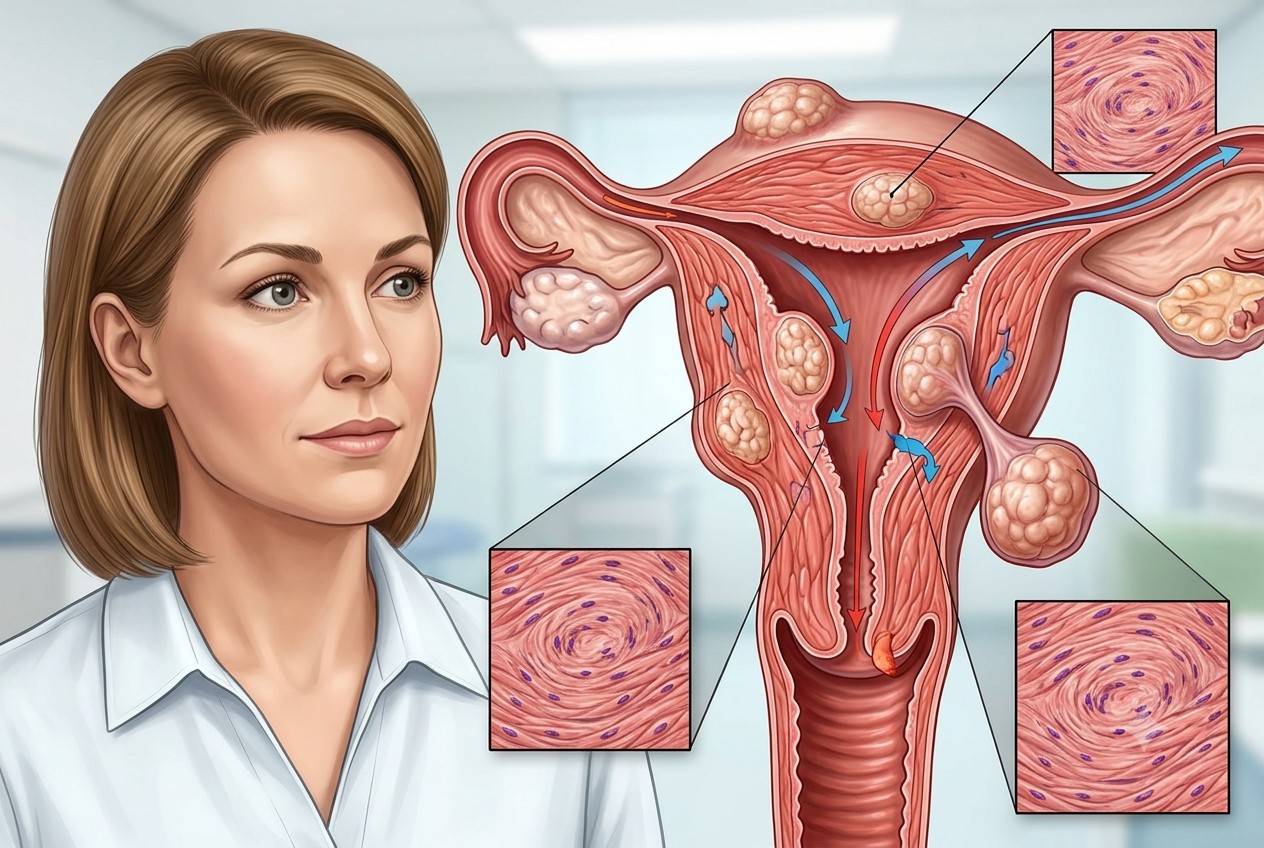
- A fibroid is a benign (noncancerous) tumor made of muscle cells in the uterus. It is the most common pelvic tumor during the reproductive years.
- Fibroids can grow as a single nodule (one tumor) or in clusters.
- They range in size from as small as a sesame seed to as large as a watermelon. The diameter can be anywhere from about 1 mm (0.04 in) to more than 20 cm (about 8 in), or even larger.
- Fibroids may or may not cause symptoms, because not every fibroid does. Symptoms that can occur include heavy or prolonged periods, bleeding between periods, lower back pain, frequent urination, and pain during sex.
What causes uterine fibroids?
The exact cause of uterine fibroids is still unclear. Researchers have, however, found several factors linked to how fibroids form and grow.
Gene changes
A study published by the National Center for Biotechnology Information (NCBI) in the U.S. found that changes in genes, such as chromosome abnormalities or pieces of one chromosome moving to another (translocations), may start fibroids and help them grow.
These changes may also be passed down to the next generation. For example, if a mother has fibroids, her daughter has about 3 times the risk of developing them.
The hormone estrogen
Estrogen is thought to help fibroids grow. Fibroids tend to get bigger when estrogen levels are high and to shrink or stop growing when levels are low. Examples that point to this link include:
- Most fibroids occur during the reproductive years, from age 30 to 50. This is when estrogen levels are at their highest.
- Fibroids can form during pregnancy, when estrogen is high.
- Fibroids grow in very different patterns. They can grow quickly during the reproductive years, when estrogen is high, and tend to shrink after menopause, when hormone levels drop.
Insulin-like growth factor 1 (IGF-1)
IGF-1 helps the body renew tissue and keep muscles and bones growing normally. It has also been linked to fibroid growth. People with obesity, whose IGF-1 levels stay high, often have about twice the risk of uterine fibroids compared with people whose weight is stable.
The extracellular matrix (ECM)
The extracellular matrix is a network of molecules that helps cells stick together. It includes collagen, enzymes, glycoproteins, and hydroxyapatite. When these components increase, the structure and stiffness of the matrix change, and this may help fibroids form and grow.
What complications can uterine fibroids cause?
Fibroids are benign and can shrink after menopause. Still, some complications that develop while they are growing can seriously affect health and daily life. The most common ones are below.
Anemia
Heavy periods or bleeding between periods are symptoms of fibroids. This blood loss is why people with fibroids so often develop anemia.
If it continues without treatment, it can become chronic anemia. This can lead to weight loss, weakness, and not having enough energy for daily activities.
Trouble getting pregnant and pregnancy complications
“Can I get pregnant if I have fibroids?” is one of the questions women search for most. According to obstetrics and gynecology experts, the chance of pregnancy depends on the condition. The good news is that most women with fibroids can still get pregnant. In some cases, fibroids that grow just under the lining of the uterus (submucosal fibroids) can make it harder for an embryo to implant in the uterine lining. Infertility caused by fibroids is rare.
Fibroids can raise the risk of pregnancy complications, including:
- Slow fetal growth: When there are multiple fibroids, they can limit the nutrients passing from mother to baby, so the baby may not grow as expected.
- Preterm birth: Very large fibroids, or multiple fibroids, can trigger uterine contractions. This raises the risk of preterm birth.
- Miscarriage: Large fibroids, or multiple fibroids, can press on the fetus and raise the risk of miscarriage.
Other complications
Other complications of uterine fibroids include:
- Fibroids that grow on the outside wall of the uterus on a stalk (pedunculated subserosal fibroids) can twist, causing abdominal pain.
- Very large fibroids can press on nearby organs, such as the ureters (the tubes that carry urine from the kidneys), the bladder, the rectum, or the veins in the legs.
How are uterine fibroids treated?
Treatment depends on the size, number, and location of the fibroids, as well as the symptoms they cause. If you have no symptoms, you may not need treatment. You may only need regular monitoring through routine gynecologic exams.
When fibroids grow and cause more symptoms, these options may be used.
Medicines
Ask your doctor before taking any medicine. Options include:
- Over-the-counter (OTC) pain relievers: These help manage the pain and discomfort fibroids cause. Examples are acetaminophen (Tylenol) and ibuprofen.
- Iron supplements: If you develop anemia, your doctor may recommend iron supplements, which help the body make more red blood cells.
- Hormonal birth control: These medicines can help ease fibroid symptoms such as heavy periods, painful periods, or bleeding between periods. Options include birth control pills, oral progesterone, and a levonorgestrel intrauterine device (LNG-IUS).
- GnRH agonists: These drugs work by shrinking fibroids and are often used before surgery to make the fibroids easier to remove. The effect is only temporary, and the fibroids can grow back if you stop taking them.
- Tranexamic acid: This medicine treats heavy periods in people with fibroids. It does not affect the chance of getting pregnant, so it is often used by women who are planning to have a baby.
- Elagolix: This medicine helps control heavy uterine bleeding. It is used for up to 24 months in adults who have moderate to severe fibroid symptoms, have not yet reached menopause, and are not able to have surgery at this time.
Procedures and surgery
If medicine does not work and symptoms get worse quickly, surgery is the next step. The type of surgery depends on your symptoms and whether you plan to have children. Options include:
- Hysterectomy (removal of part or all of the uterus): This is usually used for people who do not want children or do not want more children. The uterus is removed through a minimally invasive (laparoscopic) incision through the vagina or the abdomen.
- Uterine artery embolization: A small catheter is placed into the uterine artery to block the blood flow from the artery to the fibroids. This makes the fibroids shrink and improves symptoms.
- Myomectomy (removal of the fibroids): This removes the fibroids from the wall of the uterus. It is considered an alternative to hysterectomy for people who plan to have children. The fibroids are removed with laparoscopic surgery or open surgery.
- Radiofrequency ablation (RFA): This treatment uses radiofrequency (RF) energy to treat fibroids and can be a safe and effective option. It is usually used only for small fibroids, in patients who have not reached menopause.
We hope this guide helps you understand what causes uterine fibroids and how they are treated once diagnosed.
References
Medical disclaimer
FAQHealth content is for informational and educational purposes only. It is not a substitute for professional medical advice, diagnosis, or treatment. Always talk with your doctor or another qualified health professional about any questions you have about a medical condition.