Signs a Broken Bone Is Not Healing: What to Know
Pain, unusual movement, or a long healing time can mean a broken bone is not healing properly. Learn the warning signs, causes, and when to see a doctor.
On this page
Most people who break a bone recover fully and return to their normal activities. During recovery, though, signs that a broken bone is not healing can point to a complication, or to a fracture that was not treated properly.
This guide explains how broken bones heal, the warning signs that healing is off track, what can cause the problem, and what to do about it.
How do broken bones heal?
Healing a broken bone takes careful treatment from a doctor and cooperation from the patient to get the best result. Even a small mistake can lead to complications with serious consequences. A bone that is not healing is one of the complications that worries both doctors and patients.
Many people do not know how a bone that is not healing differs from a bone that is still healing normally. To tell the difference, it helps to understand how bones knit back together. There are two main types of bone healing:
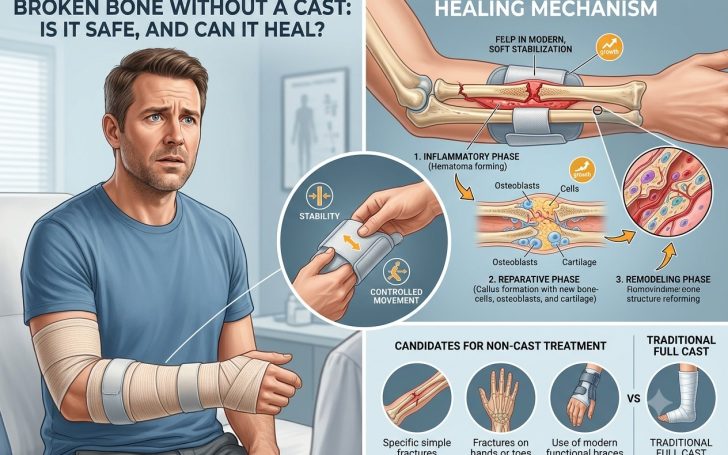
- Primary (direct) bone healing: Tiny blood vessels and cells that develop from mesenchymal tissue appear at the two broken ends of the bone. This “fills in the gap.” After the normal breakdown of bone at the fracture, a bridge of bone gradually forms across the gap, and the fracture is replaced directly by new bony tissue (callus).
- Secondary bone healing: The periosteum (the thin membrane that covers the bone) plays a key role here. Once activated, periosteum cells quickly form bone structure inside the bone. At the same time, calcium builds up in the periosteum around the fracture and forms a hard bony callus. As this callus grows in size, new bone is formed.
What does it mean when a broken bone is not healing?
When the signs of a bone that is not healing appear, it means the bone is making new tissue, but very slowly. Many experts call this slow union (delayed union). In some cases the bone may heal, but not as straight as it was before.
This can happen in any bone, but it is most common in the upper arm, the thigh bone, and the lower leg bones.
What are the signs that a broken bone is not healing?
The signs below can help you stay alert while you care for your injury.
Pain at the fracture site
A healing bone can be painful. This is normal, and the pain gradually eases as the bone heals completely. A broken bone usually takes at least 6 weeks to heal, and some take longer.
If you have pain or swelling, or a fever, that lasts a long time with no clear cause, the bone may not be healing properly. A full exam by a doctor can help you tell worrying signs apart from the normal discomfort of healing.
Unusual movement at the fracture
Bones heal by joining back together. If this process is interrupted or does not follow the usual steps, or if the bone has not joined in the right position or has shifted from its original position, the healing bone may move abnormally or feel unstable. Muscles attached to the bone through tendons can pull on it and make it move easily.
This may be obvious, or it may show up on an X-ray of the fracture site.
Healing takes too long
Usually, after about 3 months of treatment, an X-ray clearly shows the bone has joined. Healing takes longer in older adults and in people with metabolic disorders or malnutrition. If the bone is not healing, follow-up X-rays of the bone’s progress will show it clearly.
Recognizing the signs of a bone that is not healing is an important part of recovering from a fracture, and watching for them gives you a picture of how your bone is recovering. However, drawing conclusions on your own, without medical training, can be dangerous. See a doctor for an exam and an accurate assessment.
What causes a broken bone not to heal?
- A very severe injury: Fractures with a lot of displacement, missing pieces of bone, open fractures (where the bone breaks through the skin), or crushed bone with many fragments can destroy the arteries that feed the bone. A bone that breaks into several pieces, or does not get enough blood, takes longer to heal because more material is needed to join it back together.
- Problems during treatment: During surgery, the blood clot (hematoma) around the fracture may be lost, damaging the blood vessels that feed the bone and destroying much of the periosteum. The fracture may also not have been realigned well, which makes healing slower. Follow-up after treatment can also go wrong, for example if the cast is removed too late or too early.
- Other health conditions: A bone that is not healing can also occur in people with poor metabolism or malnutrition. Smoking, pulmonary tuberculosis, a weakened immune system, and diabetes can all affect bone healing too.
- Not following your doctor’s instructions: Some patients take off the cast on their own or move around too much before their doctor allows it, while the bone is not yet strong enough. This can break the bone again.
What should you do if your bone is not healing?
If you notice signs that your bone is not healing, it is best to go back to your treating doctor for a recheck and a new diagnosis. When a bone is healing well, you will notice better movement and the pain will gradually go away. Progress is not always steady, but each week should be at least a little better than the last.
If you are worried or unsure about your condition, do not hesitate to contact your doctor for advice from someone with the right expertise.
How long does it take for a broken bone to heal?
Healing time differs from person to person. It depends on many factors, such as how severe the injury is, your age, where the break is, how complex the fracture is (simple or complex), and your overall health. In many cases a bone does not heal as expected, so it is important to recognize this and act quickly to limit later effects and complications.
Children heal faster and more easily, because their bodies are still growing. Children’s bones have a remarkable ability to recover and regenerate, so with good treatment a broken bone heals in about 2 to 3 months.
In adults, healing takes longer: about 3 to 4 months to get back to walking normally. Recovery time also depends on the location of the break. For example, a broken lower leg bone needs more time and extra exercise to fully restore flexibility and strength.
Other long-term health conditions, such as diabetes, lung disease, or osteoporosis, can also slow bone healing and lead to signs that a bone is not healing.
The bottom line
Recovery from a broken bone does not always go smoothly. Keep an eye out for the signs that a bone is not healing so you can deal with them quickly, before they cause more serious problems.
References
Medical disclaimer
FAQHealth content is for informational and educational purposes only. It is not a substitute for professional medical advice, diagnosis, or treatment. Always talk with your doctor or another qualified health professional about any questions you have about a medical condition.