Is Skin Cancer Dangerous? Types, Treatment Risks, and Survival
How dangerous skin cancer is depends on its type. Compare basal cell, squamous cell, and melanoma, plus treatment risks and five-year survival rates.
On this page
According to GLOBOCAN 2020 data, skin cancer ranks fifth in incidence among both men and women. So it is no surprise that many people wonder: is skin cancer dangerous?
The answer depends on the type of skin cancer. This guide compares the three main types, explains the risks of treatment, and shares survival statistics.
How dangerous is skin cancer? It depends on the type
There are three main types of skin cancer, classified by the type of cell where the cancer begins. How dangerous your skin cancer is depends heavily on which type you have.
Is basal cell skin cancer dangerous?
Basal cell carcinoma is the most common type of skin cancer, but it is the least dangerous, because it grows slowly and rarely spreads to other parts of the body. It begins in the layer of cells beneath the outer layer of the skin (the epidermis). More than 90% of basal cell carcinomas occur on the face.
Is squamous cell carcinoma dangerous?
Squamous cell carcinoma grows from the flat (squamous) cells in the top layer of the epidermis. It grows over a few weeks to a few months and can spread to other parts of the body if it is not controlled in time.
Even so, only a small number of people with squamous cell skin cancer have it spread to the lymph nodes or other parts of the body. When that happens, doctors can still manage the disease.
Is melanoma dangerous?
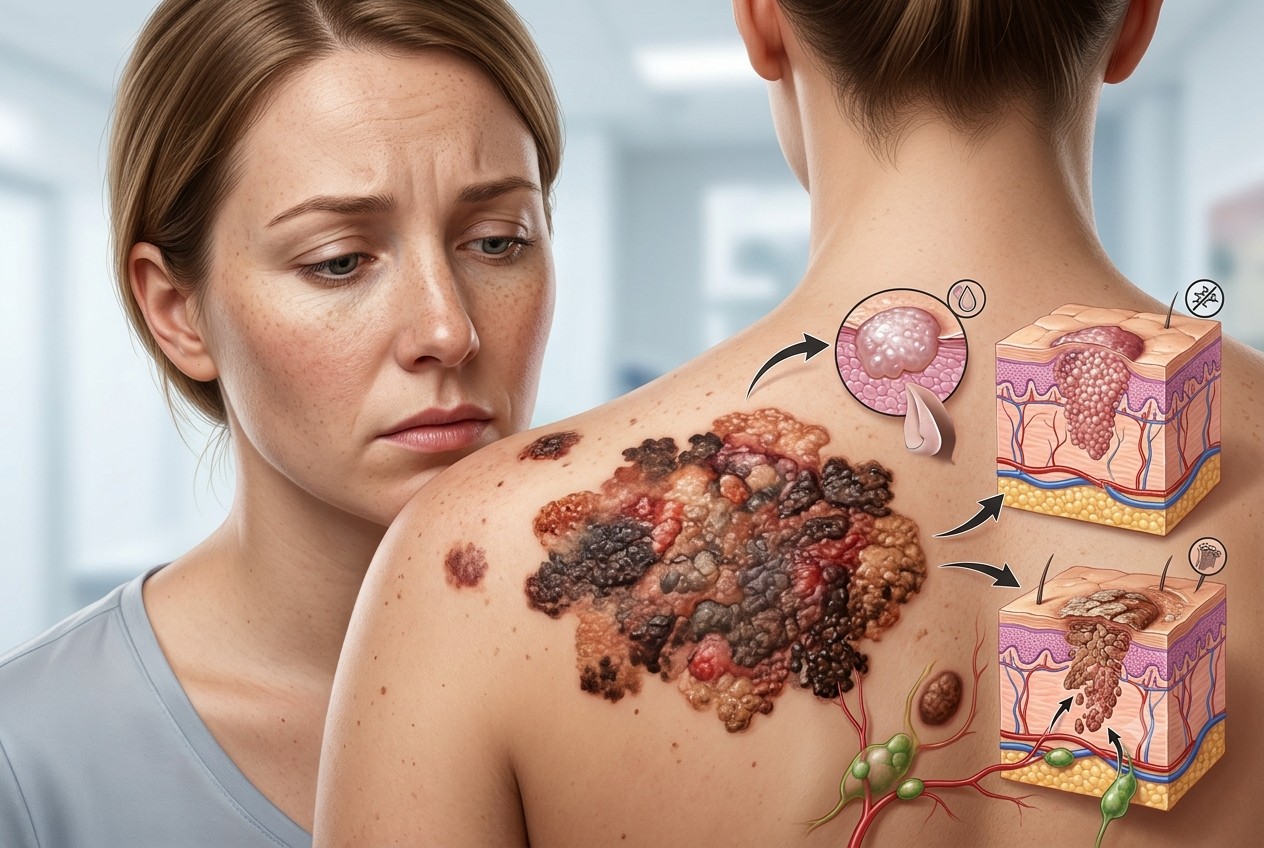
Melanoma is the most dangerous type of skin cancer, and most skin cancer deaths are from this type. Melanoma cells are highly aggressive and grow quickly, over just a few weeks to a few months. They can spread to distant parts of the body very early.
Even so, how dangerous melanoma is also depends on whether it is found early. If it is treated early, before it has spread to other parts of the body, melanoma can be controlled and the outlook is good. Once it has spread, however, it can be life-threatening.
Among malignant skin tumors, nodular melanoma is extremely dangerous. It looks different from typical melanoma. It rises into a lump and has an even color (mostly red or pink, and sometimes brown or black). Nodular melanoma grows extremely fast, is life-threatening, and has to be removed as soon as possible.
Fortunately, only 1% to 2% of skin cancers are melanoma.
What are the risks of skin cancer treatment?
There are many ways to treat skin cancer, depending on the type of cancer you have and how far it has advanced. In general, though, most current treatments damage the healthy skin around the cancer to some degree. Your doctor will explain the specific risks of treatment, which include:
- Pain or itching in the treated area, or after lymph nodes are removed
- Scarring or changes in skin color
- Bleeding during or after surgery in complex cases
- Reactions to medicines
- Lymphedema (swelling from fluid buildup) if lymph nodes are removed. Depending on which lymph nodes are removed, the neck, arm, or leg can swell.
If you develop complications from skin cancer treatment, get them treated as soon as possible.
What is the survival rate for skin cancer?
To help you understand how dangerous skin cancer is, here are some statistics on relative survival rates from the time of diagnosis.
- Non-melanoma skin cancers (basal cell carcinoma and squamous cell carcinoma) rarely cause death:
- The death rate for basal cell skin cancer is 0.08%.
- The chance of surviving 5 years or more with squamous cell skin cancer goes down with the number of lymph nodes the cancer has spread to. If it has spread to distant parts of the body, the 5-year survival rate is very low.
- For melanoma:
- The 5-year survival rate is 99% if the cancer is found before it spreads to the lymph nodes.
- The 5-year survival rate is 66% if the cancer has spread to nearby lymph nodes.
- The 5-year survival rate is 27% if the cancer has spread to distant lymph nodes and other organs.
How dangerous skin cancer is to your life depends on its type and on when it is diagnosed. If you suspect you have symptoms of skin cancer, see a doctor, and keep up with regular checkups to catch any abnormality early so it can be treated promptly.
References
Medical disclaimer
FAQHealth content is for informational and educational purposes only. It is not a substitute for professional medical advice, diagnosis, or treatment. Always talk with your doctor or another qualified health professional about any questions you have about a medical condition.