Upper Abdominal Pain After Eating: Causes and When to Worry
Pain above the belly button after eating can come from food reactions, reflux, ulcers, or gallbladder problems. Learn the causes and when to see a doctor.
On this page
Upper abdominal pain after eating can have many causes. Sometimes the food itself is to blame, but other times the pain points to a health problem that needs treatment.
Eating a very large meal can cause indigestion, belly pain, and bloating afterward. This is usually nothing to worry about and goes away on its own after a while. But if you get pain above your belly button after a normal-sized meal, it may be a sign of a problem that should be checked and treated. This guide explains the possible causes of upper abdominal pain after eating and what to do about it.
What is upper abdominal pain after eating?
The upper abdomen runs from the lower edge of your ribs down to your belly button (navel). Where the pain is can help you and your doctor guess the cause. Pain above the belly button most likely involves one of the organs in that area.
The organs in the upper abdomen include:
- Stomach
- Spleen
- Liver
- Pancreas
- Gallbladder and bile ducts
The pain may be centered in one spot in the upper abdomen, such as:
- Upper left: The breastbone (sternum) separates the left side from the right. The stomach sits here, with the pancreas behind it and the spleen tucked up toward the left.
- Upper right: This area holds almost the whole bile system, including the gallbladder on the right side, half of the pancreas, and part of the liver with its bile ducts.
- Upper middle: Part of the stomach and liver lies over the pancreas in the middle of the upper abdomen. Pain here is also called epigastric pain, and it may be linked to the bile system or the digestive system.
If you often have upper abdominal pain after eating, see a doctor to find the exact cause. Be ready to describe where it hurts and what the pain feels like: sharp in one spot or spread over a wider area, cramping in waves, or a dull, burning ache.
What are the common causes of upper abdominal pain after eating?
There are many possible causes. These are the most common.
Food poisoning
Stomach pain after a meal can be a symptom of food poisoning. It often comes with other signs, such as:
- Vomiting
- Diarrhea
- Fatigue
- High fever
Symptoms usually start within a few hours after eating.
Food allergies
In a food allergy, the immune system reacts to a substance in the food and makes antibodies against it. This can cause many symptoms, including pain in the upper abdomen after eating. Foods that commonly cause allergies include:
- Eggs
- Milk
- Peanuts and tree nuts
- Shellfish
- Saltwater fish (such as tuna, swordfish, and marlin)
- Wheat
Food intolerance
Your digestive system may be sensitive to certain foods, or unable to tolerate them, which can cause belly pain after eating. Common problem substances are:
- Lactose: found in milk and dairy products.
- Gluten: a protein found in grains such as wheat and barley.
- FODMAPs: short-chain carbohydrates that are hard to digest.
Gastroesophageal reflux disease (GERD)
GERD is a chronic condition in which stomach acid flows back up into the esophagus (the tube from the throat to the stomach). The acid irritates the lining and can damage the esophagus. Common symptoms are heartburn and a feeling that food is coming back up. These can cause upper abdominal pain after eating and sometimes chest pain.
Indigestion
Pain in the upper middle abdomen after eating is a common sign of indigestion (dyspepsia), especially when it comes with a burning feeling. It is usually linked to stomach acid during digestion and may occur along with GERD and heartburn.
Stomach ulcers
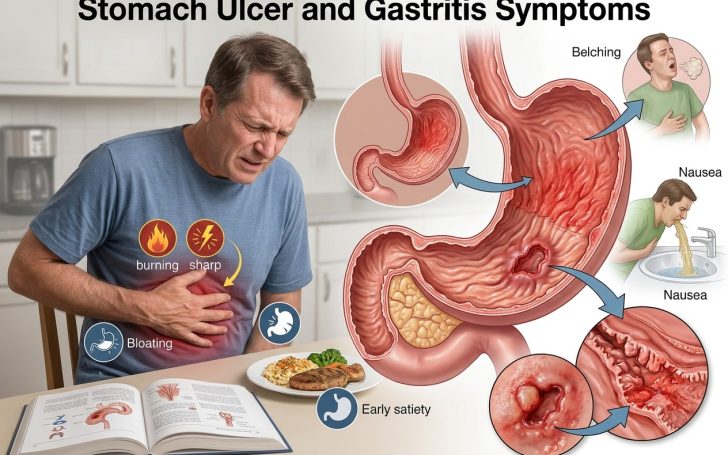
A stomach ulcer is a sore that forms in the lining of the stomach or the duodenum (the first part of the small intestine, which connects to the stomach). Ulcers can also cause upper abdominal pain after eating, especially after spicy foods or alcohol.
Biliary colic
Biliary colic happens when a bile duct is blocked, usually by gallstones. The pain often shows up after eating and is felt in the upper right abdomen. It may be constant or come and go.
Acute pancreatitis
Acute pancreatitis (sudden inflammation of the pancreas) can cause belly pain that spreads to the back. Causes of the inflammation include gallstones, high levels of fats in the blood, and heavy alcohol use. To diagnose it, a doctor may order blood tests, an ultrasound, or a CT scan.
Stress
Stress can tighten your muscles and cause stomach pain or discomfort in the upper abdomen after eating. You may be able to avoid this by taking slow, deep breaths before a meal to help your muscles relax, and by eating slowly.
Is upper abdominal pain dangerous?
It is hard to tell whether upper abdominal pain is a warning sign from how it feels alone. Sometimes a serious problem causes only mild symptoms for a short time, while a harmless problem causes a lot of pain and discomfort.
The best way to learn how serious the pain is, whether it happens after eating or at any other time, is to see a doctor, such as a digestive health specialist (gastroenterologist), for an exam and an accurate diagnosis. See a doctor right away if the pain is constant or keeps coming back, or if it comes with symptoms such as:
- Blood in your stool or vomit
- High fever
- Dizziness or confusion
- Trouble breathing
- Yellow skin and eyes (jaundice)
- A swollen belly (bloating)
How is upper abdominal pain after eating diagnosed and treated?
Diagnosis
Sometimes a doctor can diagnose the cause from a physical exam and your description of the pain. If your symptoms are more worrying, the doctor may order more tests, such as:
- Endoscopy of the digestive tract
- X-rays
- CT or MRI scans
- Blood tests
- Stool tests
If a food intolerance is suspected, you will need to keep a food diary. Writing down what you eat and the symptoms you have helps you find which foods you cannot tolerate.
Treatment
Based on the diagnosis, your doctor will choose the treatment that fits your case. If the pain is caused by a food intolerance, your doctor will suggest a suitable diet once the problem foods are identified.
Many cases of stomach pain after eating can ease with over-the-counter pain relievers. You can try them at home, following the directions on the label or the advice of your doctor or pharmacist. Some pain relievers, such as ibuprofen or aspirin, can irritate the stomach and make an ulcer or bleeding worse, so ask your doctor or pharmacist which one is safe for you.
For chronic or more serious conditions, your doctor will prescribe specific medicines. Some cases may even need a surgical procedure.
How can you prevent upper abdominal pain after eating?
To lower your chances of belly or stomach pain after meals, you can try the following:
- Keep an eye on your portion sizes through the day.
- Avoid foods that have caused allergies or indigestion in the past.
- Eat plenty of fruits, vegetables, and high-fiber foods.
- Drink plenty of water, both with meals and between meals.
The bottom line
There are many possible reasons for pain in the upper abdomen after eating. If the pain, indigestion, or heartburn is new, try resting and using an over-the-counter medicine to ease the symptoms. But if it happens often or lasts for several weeks, see a doctor as soon as possible.
References
Medical disclaimer
FAQHealth content is for informational and educational purposes only. It is not a substitute for professional medical advice, diagnosis, or treatment. Always talk with your doctor or another qualified health professional about any questions you have about a medical condition.