Stomach Ulcer and Gastritis Symptoms: Warning Signs and Complications
Stomach ulcer symptoms range from burning pain and bloating to black stools and vomiting blood. Learn the common signs, the danger signs, and the complications.
On this page
Gastritis (inflammation of the stomach) and stomach ulcers are two different conditions, but they often share many symptoms. Untreated gastritis can eventually lead to ulcers, so this guide covers stomach ulcer symptoms and gastritis symptoms together.
Gastritis is inflammation of the stomach lining. This lining is a layer of soft tissue (the mucosa) that protects the stomach from the acids, enzymes, and germs that pass through it every day.
A stomach ulcer forms when the protective lining wears away, letting stomach acid and digestive enzymes eat into the stomach wall. The result is an open sore that acid keeps irritating. If ulcers are not treated, they can start to cause serious complications, such as internal bleeding.
What are the common symptoms of a stomach ulcer?
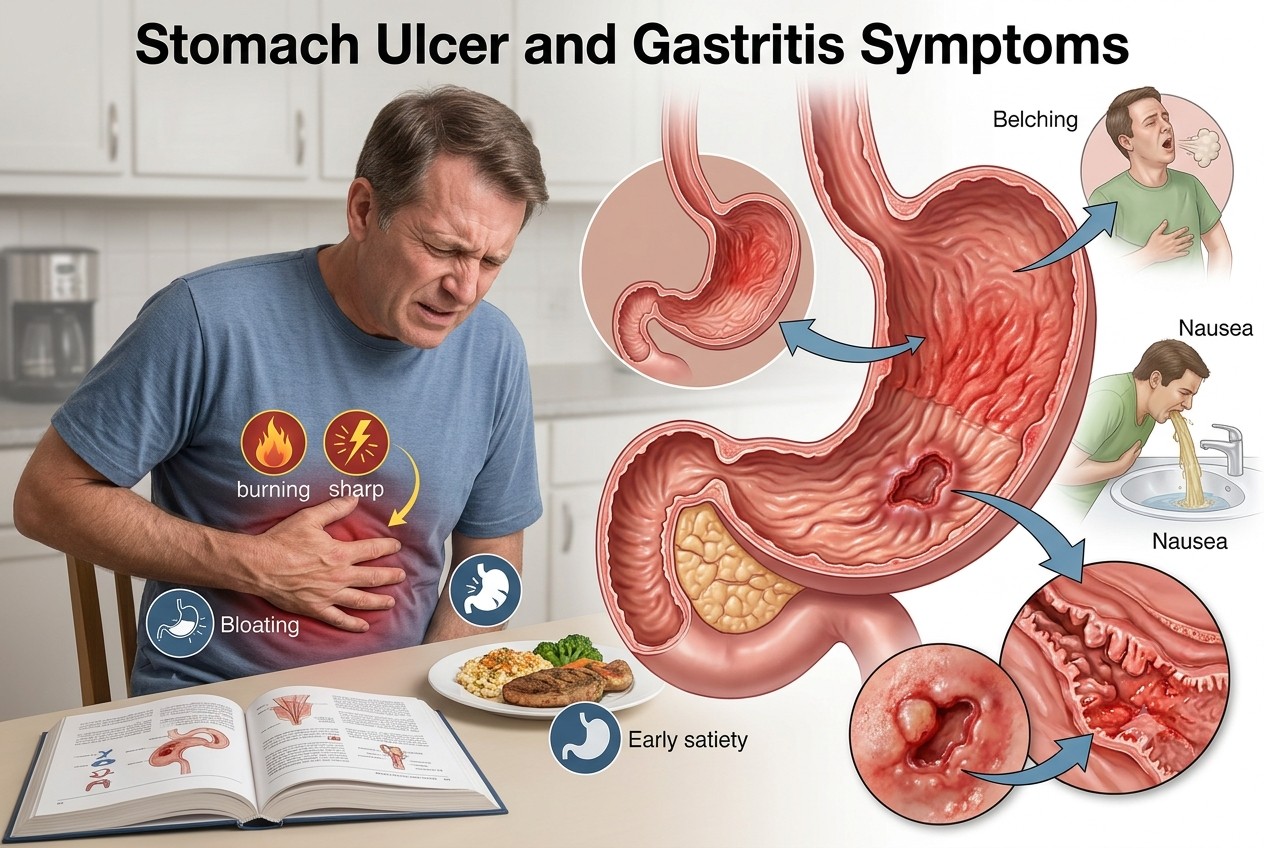
Some people with gastritis or a stomach ulcer have no symptoms until a complication develops. Others have these common symptoms:
- Stomach pain that is dull or comes in burning waves in the upper belly (just below the breastbone and above the belly button). The pain may ease for a while when you eat or take an antacid or an acid-reducing medicine. It is worse between meals and at night, when the stomach is empty and acid builds up with no food to digest. Some people, however, feel worse after eating.
- Indigestion, especially after greasy foods
- Loss of appetite and feeling full quickly after you start eating
- Bloating and a swollen belly
- Nausea and vomiting
- Sour burps (a sour taste as acid comes back up)
- Heartburn
How is ulcer pain different from heartburn from acid reflux?
It is easy to mistake the stomach pain of an ulcer for the heartburn of gastroesophageal reflux disease (GERD, or acid reflux). They can usually be told apart. Ulcer pain stays in the upper belly. Reflux pain is always burning, covers a wider area, and tends to spread up into the chest.
Many people have both conditions at the same time, and acid reflux can also be a sign of a stomach ulcer.
What are the symptoms of an H. pylori ulcer?
When an ulcer is caused by the bacterium H. pylori, indigestion is usually prominent. This bacterium is behind up to 60% of stomach ulcers.
When are stomach ulcer symptoms serious?
Less often, a stomach ulcer or gastritis can cause serious symptoms, such as:
- Vomiting, or vomiting blood. The vomit may be red or black.
- Dark blood in the stool, or stool that is black or tarry
- Sudden, sharp, or severe belly pain that does not stop
- Trouble breathing
- Feeling dizzy or lightheaded
- Fainting
- Weight loss with no known cause
- Ulcer symptoms that change or get worse
- Shock from blood loss
If you have any of these symptoms, see a doctor right away so they can check your condition and start the right treatment. These serious symptoms are often a sign of a bleeding ulcer.
How dangerous is a stomach ulcer?
An untreated ulcer can lead to these complications:
- Internal bleeding. Most people with a stomach ulcer will not bleed, but bleeding is still the most common complication. An ulcer that oozes blood over a long time leads to anemia and can even cause severe blood loss.
- Perforation (a hole in the stomach). An ulcer that keeps being eaten away by acid can eventually break through the stomach wall, causing extreme pain. Through the hole, bacteria from the digestive tract can get into the abdominal cavity and cause an infection there (peritonitis). From there, the infection can spread into the blood and cause sepsis, which is life-threatening.
- Pyloric stenosis (a blocked stomach outlet). An ulcer at the pylorus, the narrow passage from the stomach into the duodenum (the first part of the small intestine), can block food from moving into the small intestine. This can happen even after the ulcer has healed, because a healing ulcer forms scar tissue that can grow and narrow the passage.
- Stomach cancer. This is rare, but some ulcers, especially those caused by H. pylori, raise the risk of stomach cancer.
Some stomach ulcers are not benign. They can be a sign of stomach cancer, which may be caused by H. pylori bacteria. If you have the symptoms above, see a health care provider so you can be diagnosed and treated early.
Stomach ulcer symptoms at a glance
- Common signs: stomach pain, indigestion, loss of appetite, bloating, sour burps
- Signs of a severe ulcer: vomiting blood or blood in the stool, black stools, dizziness, fainting, weight loss
Can a stomach ulcer be cured?
Yes. Inflammation or an ulcer can heal with proper treatment. To make that happen, a doctor needs to find the cause and how severe the condition is, and then choose the right treatment plan. Medicine is always used first. Surgery is used if there are severe complications, such as pyloric stenosis or a perforation of the stomach or duodenum. Your doctor will also guide you on lifestyle changes.
We hope this guide helps you recognize the common symptoms of a stomach ulcer and know when it is serious enough to need medical care right away. Don’t ignore any sign, even a mild one. Some people have no worrying symptoms until a stomach ulcer has already caused dangerous complications.
References
- Stomach Ulcer — Cleveland Clinic
- Peptic ulcer — Symptoms and causes — Mayo Clinic
- Stomach ulcer — Symptoms — NHS
- Stomach ulcer — Better Health Channel
- Symptoms & Causes of Peptic Ulcers (Stomach or Duodenal Ulcers) — NIDDK
- Gastritis — Cleveland Clinic
- Gastritis — Symptoms and causes — Mayo Clinic
- Gastritis — NHS
Medical disclaimer
FAQHealth content is for informational and educational purposes only. It is not a substitute for professional medical advice, diagnosis, or treatment. Always talk with your doctor or another qualified health professional about any questions you have about a medical condition.