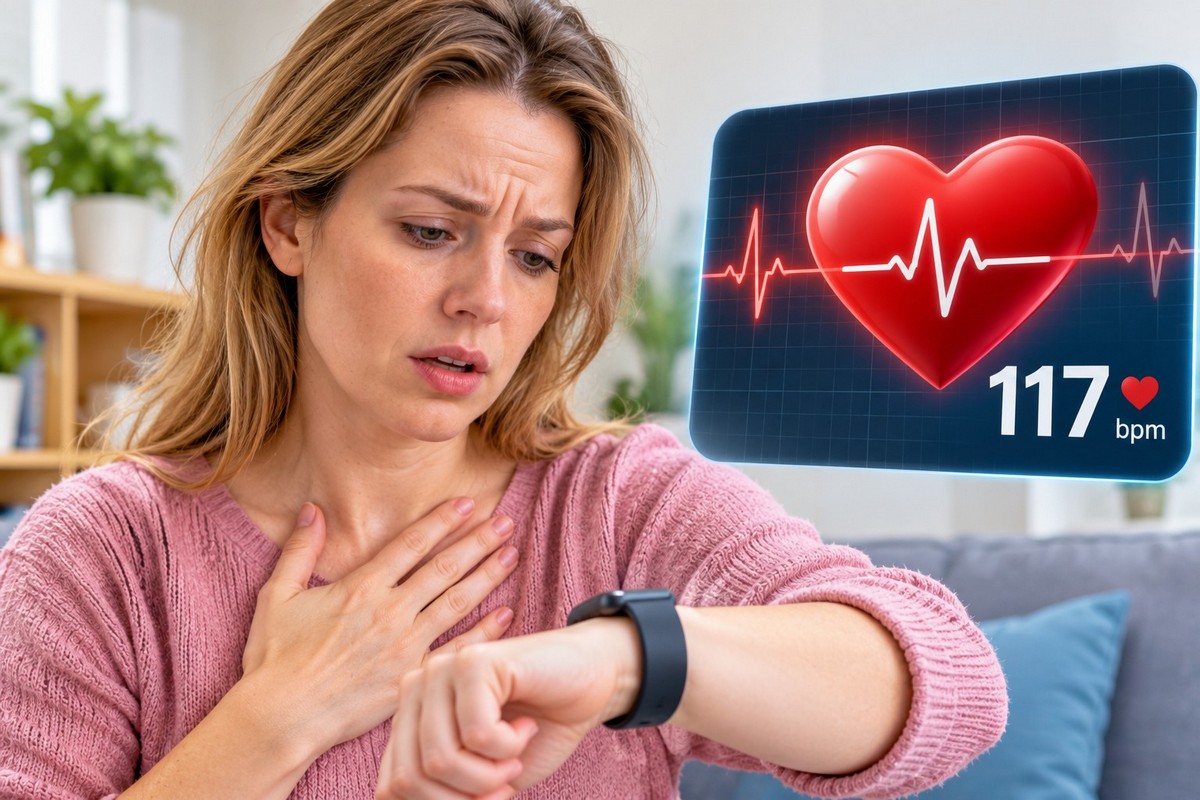
Is a Heart Rate of 117 Dangerous? What a Fast Heartbeat Means
A heart rate of 117 is considered fast. Learn when it is harmless, what complications it can cause, which symptoms to watch for, and how to steady your heartbeat.
On this page
“Is a heart rate of 117 dangerous?” is a common question for people who notice an unusually fast heartbeat. The honest answer depends on several factors, including how often it happens, how long it lasts, and whether you have other heart conditions.
This guide explains what counts as a fast heart rate, what a rate of 117 can mean, which symptoms to watch for, and what you can do to help steady your heartbeat.
What is considered a fast heart rate?
Before asking whether a heart rate of 100, 110, or even 117 is dangerous, it helps to know what is normal. In a healthy person, the average heart rate at rest is about 60 to 100 beats per minute. A rate above 100 beats per minute is considered a fast heart rate (tachycardia).
Is a heart rate of 117 dangerous?
If your heart rate is often 117 beats per minute, that counts as a fast heart rate. It is not always a reason to worry. Your heart normally beats faster when you exert yourself, exercise, or feel stressed. In healthy people with no underlying condition, a fast heartbeat is also unlikely to cause complications.
Sometimes, though, a heart rate above 100 beats per minute is a warning sign of a condition that needs attention. And some long-lasting fast heart rhythms can lead to more serious health problems if they are not treated.
When the heart beats faster than 117 times a minute, it may not have enough time to fill completely with blood between beats. That can be harmful, because the cells, tissues, and organs may not get the blood and oxygen they need.
The complications of a fast heartbeat vary. They depend on the type of fast heart rhythm, how fast the heart is beating, how long it lasts, and whether you have other heart conditions.
When your heart rate climbs to 117 beats per minute, especially if it lasts, you may face potential complications such as:
- Blood clots, which raise the risk of a heart attack or stroke
- Frequent fainting or loss of consciousness
- Heart failure
- Sudden cardiac death, which is usually linked to ventricular fibrillation or ventricular tachycardia
What symptoms go with a fast heart rate, and when should you see a doctor?
Because of these possible complications, it is important to recognize the symptoms of a fast heart rate early. Be alert if you often have any of the following:
- Dizziness, lightheadedness, or feeling faint
- A racing, pounding, or fluttering heartbeat (palpitations)
- Discomfort or a sharp pain in the left side of the chest
- Shortness of breath
- Fatigue and less ability to handle exertion
- Fainting
Get medical care right away if you have chest pain, pressure, or discomfort, shortness of breath, weakness, dizziness, or fainting.
If you check your pulse several times and it stays above 117 beats per minute for a long time, you may be at risk for serious health problems. See a doctor promptly. You can also use the lifestyle changes below to help steady your heart rate.
What can you do to steady your heart rate?
Several lifestyle changes can help regulate your heart rate and lower your risk of heart disease in general:
- Exercise. Activities such as walking, swimming, and cycling can raise your heart rate slightly for a short time afterward. Over time, though, regular exercise makes your heart work better and lowers your resting heart rate. Experts recommend that adults get at least 150 minutes of moderate-intensity exercise per week.
- Reduce stress. Lowering stress can help steady your heart rate. You can try yoga or stretching, reading, journaling, meditation, deep breathing, listening to music, going for a walk, or seeing a mental health professional.
- Change your diet. Some foods can raise your heart rate, especially salt (sodium). Eating less salt and adding heart-healthy foods such as vegetables and fruits can help limit a fast heart rate.
- Quit smoking. Smoking raises your heart rate, and the more you smoke, the more harm it does to your cardiovascular system and overall health. If you smoke, quit as soon as you can.
- Limit caffeine. Caffeine can raise your heart rate. If you have a fast heart rate, cut back on drinks that contain caffeine, such as coffee, tea, soda, and energy drinks.
- Drink plenty of water. When you are dehydrated, less blood circulates through your body. This forces your heart to beat faster to pump blood to every part of your body. Drinking enough water every day is one way to help steady your heart rate.
- Get enough sleep. Sleep is important for your overall health and your heart health. Regularly not getting enough sleep can raise your heart rate and blood pressure. If you have trouble sleeping, try exercising, sticking to a sleep schedule, using curtains to make your room darker, and avoiding electronic devices and TV close to bedtime.
The bottom line
A heart rate of 117 is not always dangerous, but it can be, especially if it lasts. Try to keep your heart rate in the normal range of about 60 to 100 beats per minute. If repeated checks show your heart rate staying above 117 beats per minute for a long time, you are at risk for serious health problems. See a doctor promptly, and use the lifestyle changes above to help steady your heartbeat.
References
Medical disclaimer
FAQHealth content is for informational and educational purposes only. It is not a substitute for professional medical advice, diagnosis, or treatment. Always talk with your doctor or another qualified health professional about any questions you have about a medical condition.