Measles Symptoms by Stage: What to Expect and How to Stop the Spread
Measles symptoms unfold in stages, from early fever and cough to the telltale rash. Learn the timeline, when it spreads, and how to protect others.
On this page
Measles is a viral infection that spreads very easily and can cause serious complications, even death. Cases and deaths have dropped sharply since the measles vaccine became available, but the disease is still dangerous for pregnant women, infants, and young children. That is why it pays to know the early signs.
Measles symptoms develop in stages. This guide walks through each stage so you can spot the signs early, isolate the person who is sick, and get them care quickly.
What is measles?
Measles is caused by the measles virus, a type of morbillivirus. Its most recognizable sign is a red skin rash.
The virus travels through the air in tiny droplets when a person with measles coughs, sneezes, or talks. Anyone who is not immune and breathes in these droplets can get infected. Because of this, measles spreads quickly and can easily turn into an outbreak.
Anyone who has not been vaccinated can catch measles. The disease is less common than it used to be thanks to vaccination, but it is still a threat to unvaccinated people, especially pregnant women, infants, and young children.
Possible complications include:
- Diarrhea
- Vomiting
- Ear infections
- Pneumonia
- Encephalitis (inflammation of the brain)
A pregnant woman who gets measles is at higher risk of preterm birth, a low-birth-weight baby, or stillbirth.
Measles symptoms
Symptoms usually appear 7 to 14 days after contact with the virus. The most common ones are:
- Fever
- Dry cough
- Runny nose
- Sore throat
- Red, irritated eyes (conjunctivitis), sometimes with sensitivity to light
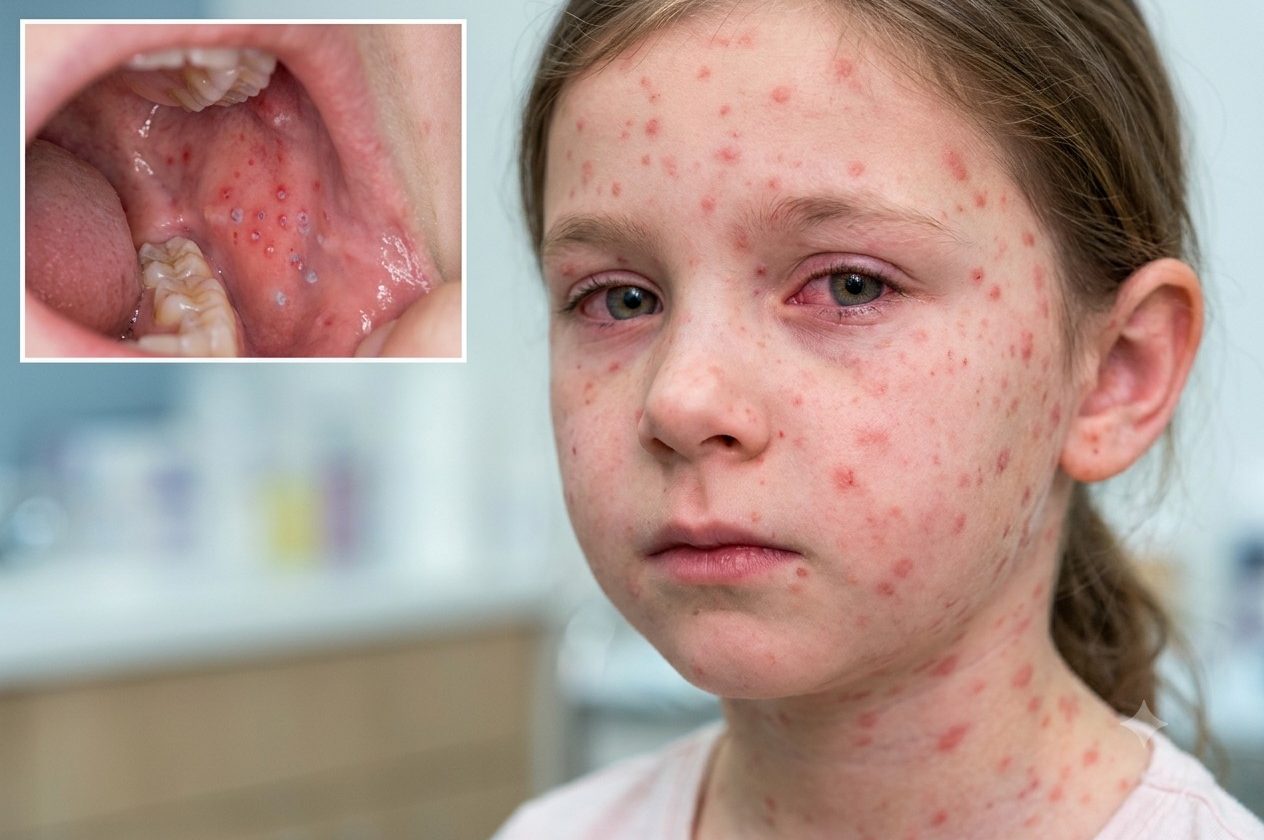
- Small white spots inside the mouth
- A red rash that starts on the head and gradually spreads down the body
These symptoms do not all show up at once. They appear in a typical order, described below.
Incubation period: 7 to 14 days
For the first 7 to 14 days after infection, the virus is multiplying in the body. This is called the incubation period. You will not notice any symptoms during this time.
Early symptoms: after the incubation period
At first, measles does not cause any distinctive symptoms, so it is easy to mistake for another illness. It usually starts with a mild to moderate fever, often along with a runny nose, a cough that won’t go away, red eyes (conjunctivitis), and a sore throat. These symptoms are fairly mild and can last 2 to 3 days.
Koplik spots: 2 to 3 days after the first symptoms
About 2 to 3 days after the early symptoms begin, tiny white spots with a red border appear on the lining of the inside of the mouth. These are called Koplik spots. They come and go quickly, and they are a warning that the measles rash is about to start.
The rash: 3 to 5 days after the first symptoms
About 3 to 5 days after the first symptoms, the measles rash breaks out. It usually begins as small, flat, red spots on the face and behind the ears. From there it spreads to the rest of the body: the neck, arms, chest, thighs, lower legs, and feet.
When the rash appears, a fever can climb as high as 104°F to 105.8°F (40°C to 41°C). The spots may be raised. As the rash spreads, spots can run together into blotchy red patches. The rash is usually not itchy.
Recovery
The measles rash can last about 7 days. The spots fade first on the face and last on the thighs and legs. After the other symptoms have gone away, some effects can linger for about 10 days, such as darker skin, peeling where the rash was, and a cough.
When is measles contagious, and what should you do?
A person with measles can spread the virus for about 8 days. This starts 4 days before the rash appears and ends 4 days after it appears.
If you or someone in your family has measles symptoms (such as a rash), or you think you may have been exposed, see a doctor for an exam, testing, and treatment. It is also important to protect family members, friends, and others who are not immune to measles:
- Isolate the person who is sick. Someone with measles should stay home while symptoms are developing and avoid daily activities that bring them into contact with others, such as school, work, and outings. Unvaccinated people in the household, especially pregnant women, infants, and young children, should stay away from the person who is sick.
- Get vaccinated if you are not immune. Anyone at risk of catching measles should be fully vaccinated as early as possible. This matters most for people who are likely to have serious complications, including young children and women who are planning a pregnancy.
Caring for the person at home also matters. These tips can help:
- Get plenty of rest and drink lots of fluids to avoid dehydration.
- Acetaminophen (Tylenol) or ibuprofen can bring down a fever and ease aches and pains. Do not give aspirin to children under 16, because it can lead to a serious condition called Reye’s syndrome.
- If light bothers the eyes, stay out of bright sunlight, for example by staying indoors and closing the curtains.
- If conjunctivitis causes crusting around the eyes, gently wipe the crusts away with a cotton ball soaked in warm water.
The bottom line
Recognizing measles symptoms and stopping the spread of the virus are both important, especially if your household includes a pregnant woman, an infant, or a young child. Getting vaccinated against measles is essential. If anyone in your family is not yet immune, especially if you are planning a pregnancy, make sure they are fully vaccinated.
References
Medical disclaimer
FAQHealth content is for informational and educational purposes only. It is not a substitute for professional medical advice, diagnosis, or treatment. Always talk with your doctor or another qualified health professional about any questions you have about a medical condition.