Why Does Sunscreen Clump or Pill? Causes and Easy Fixes
Sunscreen that clumps or leaves white streaks protects your skin less well. Learn the 7 common causes and how to apply it smoothly.
On this page
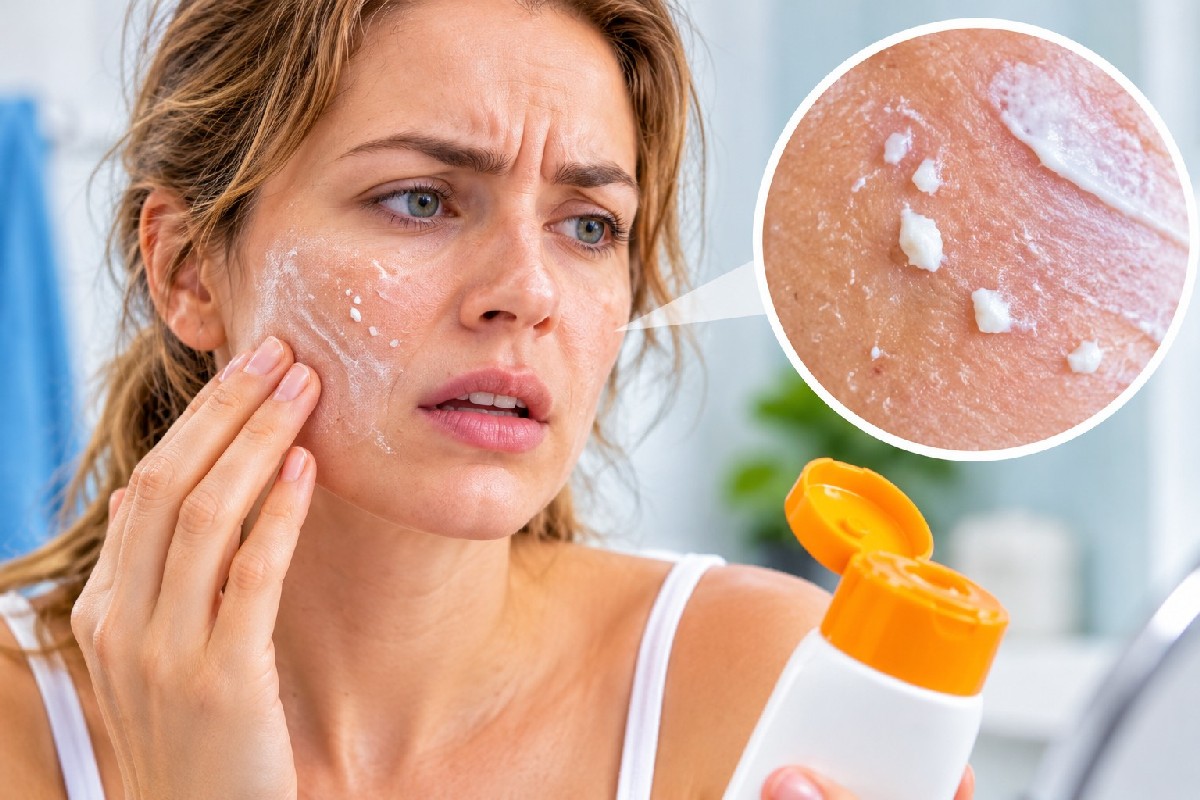
Sunscreen is now a must-have step in a daily skin care routine. But a few common problems can make it frustrating to use. One of them is sunscreen that clumps or pills on your skin, which keeps the product from protecting you from the sun as well as it should.
This guide explains why sunscreen clumps and how to apply it correctly so it goes on smoothly.
Why does sunscreen clump or pill?
Sunscreen clumping usually has more than one cause. Some come from the product itself, and others come from skin care steps that are done in the wrong order or the wrong way. These problems can also make sunscreen look white, chalky, or patchy on the skin. The 7 most common reasons are:
- Using too much sunscreen. Applying a lot of any product, whether a serum or a sunscreen, overloads the skin, and the ingredients don’t have time to absorb.
- An incomplete morning routine. If you skip a step, such as removing makeup, washing your face, or exfoliating (removing dead skin cells) as needed, your skin can feel rough and dead skin cells don’t get replaced. Sunscreen then goes on sticky, with white streaks that make your skin look blotchy and uneven.
- Skin that is too dry or too oily. On very dry skin, sunscreen tends to settle on the surface instead of gliding on, which makes it look clumpy. On very oily skin, a sunscreen (especially a water-based one) doesn’t blend well with the natural oils on your face, so it leaves a shiny, uneven layer.
- Products that don’t work well together. The ingredients in your sunscreen may not be compatible with the moisturizer or primer you applied before it.
- A high silicone content. Some products contain a lot of silicone.
- Poor storage or an expired product. A sunscreen that was stored badly, is past its expiration date, or is poor quality can clump.
- Not waiting long enough between layers. If you spend too little time letting each skin care product settle before you apply sunscreen, the layers can ball up.
How can you fix sunscreen that clumps?
Once you know why sunscreen clumps, you can prevent it with a few changes to your routine.
Start with clean skin
Always begin with clean, dry skin before you apply any skin care product. Skin has natural oils that keep it soft. You can’t (and shouldn’t) remove all of them, but it is important to wash away some of them along with the dirt that builds up during the day.
Use a cleanser that suits your skin to create a clean surface so sunscreen can absorb more easily. Wash gently and avoid scrubbing, so that all makeup and loose dead skin cells are removed.
Moisturize your skin
In a typical routine, essences and toners go on first because skin absorbs them most easily. Next comes liquid serum, then lotion and moisturizer. Sunscreen should always be the last skin care step, before makeup. Keep your routine simple and use only the products your skin really needs, such as a moisturizer and a sunscreen.
Many people wonder whether to apply sunscreen or moisturizer first. The best approach is to moisturize first and then apply sunscreen. Well-moisturized skin is less likely to flake, so sunscreen sticks to it more easily.
Let your skin dry
After you apply a treatment product, essence, or moisturizer, wait about 2 to 3 minutes. This gives your skin time to absorb the product. Letting it dry helps sunscreen stay put on the surface and keeps it from getting diluted. It also gives you a smooth base, which makes makeup easier to apply afterward.
Dot sunscreen evenly over your face
Before blending, place small dots of sunscreen on 5 spots: your forehead, both cheeks, your nose, and your chin. This makes sure every area gets a fair amount of product and prevents some spots from getting too little and others too much.
Pat gently instead of rubbing
Rubbing or pressing hard on your skin while you apply sunscreen can make clumping worse. Dermatologists recommend patting and gently spreading sunscreen so it absorbs faster and leaves fewer white streaks and less uneven color.
Tips for applying sunscreen correctly
In addition to the steps above, keep these tips in mind so your sunscreen both works well and looks good:
- Shake the product well before you use it.
- Exfoliate twice a week, and remove makeup and wash your face regularly.
- Don’t put sunscreen on right after your moisturizer or essence. Give those products time to absorb first.
- Make sure your skin is dry before you apply sunscreen. Leftover water or sweat on your face can also make sunscreen clump.
- Pat and spread sunscreen gently instead of rubbing it into your skin.
- Use just enough product.
- Store sunscreen in a cool, well-ventilated place, away from direct sunlight and heat, which can change the texture of the product and cause clumping.
- Avoid products that contain a lot of silicone.
- Choose textures that suit your skin type and work well together. For example, if you have oily or acne-prone skin, use a water-based sunscreen.
If you have taken care of all of the above and your sunscreen still clumps, consider switching to a lighter-textured sunscreen. Look for a formula that includes hyaluronic acid and other moisturizing ingredients. A lotion or gel sunscreen may also soak into your skin more easily.
The bottom line
Sunscreen that clumps is usually a sign of too much product, a skipped step, a mismatch between products, or rushing between layers. Preparing your skin, waiting a few minutes between steps, and patting sunscreen on gently can help it go on smoothly so you get the sun protection you want.
References
Medical disclaimer
FAQHealth content is for informational and educational purposes only. It is not a substitute for professional medical advice, diagnosis, or treatment. Always talk with your doctor or another qualified health professional about any questions you have about a medical condition.