9 Diabetes Skin Complications: Signs, Causes, and Care
Diabetes can affect your skin in nine ways, from dark patches to infections and dry skin. Learn the signs, causes, and when to see a doctor.
On this page
Skin problems are sometimes one of the most common signs of diabetes. Some of them can be worrying. For example, diabetes can cause skin ulcers, and when these come with wounds that don’t heal and are hard to spot, they can drag on and may eventually lead to limb amputation. Other skin changes are only a cosmetic issue.
Either way, it pays to pay attention. This guide covers nine skin complications of diabetes so you can spot them and get treatment in time.
What causes skin complications in people with diabetes?
Diabetes is a chronic disease that raises the sugar level in your blood. It happens when the body doesn’t make enough insulin (the hormone that lets the body use blood sugar for energy) or when it doesn’t use insulin well (insulin resistance).
High blood sugar that lasts a long time, especially when it isn’t well controlled, increases a process in the body called oxidative stress. This process damages nerves and blood vessels.
Your skin contains a huge number of nerves and tiny blood vessels. They let you feel touch, temperature, and pain. Diabetes affects the nerves in the skin and the blood vessels that feed it, and that is what leads to skin problems.
Skin complications of diabetes are more common in older adults and in people who have had diabetes for many years.
What are the signs of diabetes skin complications?
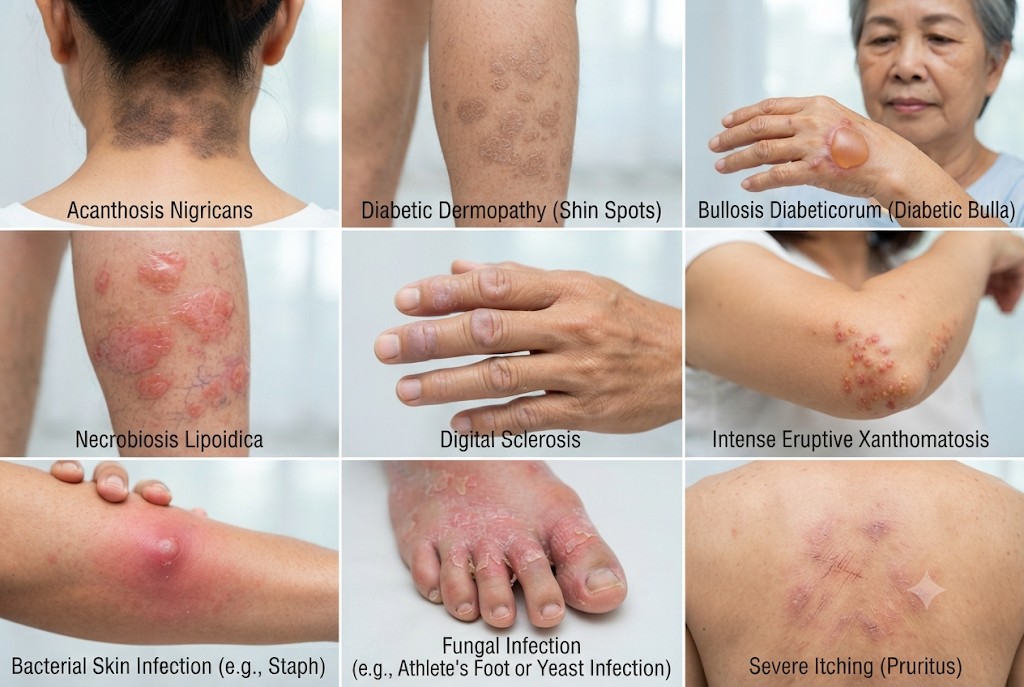
1. Acanthosis nigricans (dark patches)
Acanthosis nigricans causes dark patches of skin in body folds, such as the neck, armpits, or groin. Sometimes it also shows up on the hands, elbows, or knees.
The cause is insulin resistance. The patches can also be a sign of prediabetes or type 2 diabetes. This skin complication is more common in people with obesity.
Certain creams can help lighten the dark patches. The most effective treatment, though, is to deal with the root cause, which is insulin resistance. Lifestyle changes can help reverse insulin resistance: being physically active, keeping a healthy weight, and keeping your blood sugar under control.
2. Diabetic dermopathy (shin spots)
Diabetic dermopathy comes from a problem with the small blood vessels that feed the skin. It causes round or oval bumps that range from red to light brown. These brown spots are often mistaken for age spots. They usually appear on the shins. They don’t hurt, don’t spread, and don’t itch.
Diabetic dermopathy is usually harmless and doesn’t need treatment.
3. Necrobiosis lipoidica
Necrobiosis lipoidica is a skin complication of diabetes that is more common in women. It starts as small swollen bumps that look like pimples. Over time, they grow into swollen, hard patches of skin. In the end, they form yellow, red, or brown patches that can itch and hurt.
There is no cure for necrobiosis lipoidica. Treatment is aimed at controlling the symptoms. Steroid creams may help stop the condition from getting worse in the early stage.
4. Diabetic blisters
Diabetic blisters are sores that appear on their own on the legs, and sometimes on the hands, of people with diabetes. They can look frightening, but they don’t hurt and usually heal on their own.
The exact cause of diabetic blisters isn’t known. They usually develop when blood sugar stays high for a long time.
In most cases, diabetic blisters heal without treatment and leave no scars. The key is to avoid rubbing them or letting them burst, which can lead to an infection on top of the blisters. When you get your blood sugar under control, the blisters will improve as well.
5. Eruptive xanthomatosis
Eruptive xanthomatosis is a harmless skin complication of diabetes. The bumps are made of lipids (fats) that build up in the skin. They usually appear on the buttocks, shoulders, legs, or arms.
The cause is high levels of triglycerides (a type of fat) and cholesterol in the blood.
The best way to prevent and treat eruptive xanthomatosis is to control your blood cholesterol. Talk to your doctor to make a treatment plan that keeps your cholesterol from getting too high while you have diabetes.
6. Thick, hardened skin
This condition begins with skin on the backs of the hands and between the fingers that becomes hard and thick, with a waxy look. The nearby joints become stiff and hard to move. The hardened, thickened area keeps spreading if blood sugar isn’t controlled.
This skin problem is more common in people with type 1 diabetes who have high blood sugar.
The best treatment is to bring your blood sugar to a normal, steady level. Some physical therapy exercises can also help the affected joints move better.
7. Bacterial skin infections
Anyone can get a skin infection, which causes itching, redness, swelling, and pain. But people with diabetes tend to get skin infections more often, because high blood sugar creates an ideal environment for disease-causing bacteria to grow. Skin infections in people with diabetes are also usually slower to heal than in other people.
To treat a skin infection, your doctor will prescribe a suitable antibiotic. People with diabetes should also stick to their treatment plan, including medicine, diet, and daily habits that keep blood sugar under control, to lower the chance of skin infections.
8. Fungal infections
Like bacterial infections, fungal infections are not a skin complication that is specific to diabetes. Anyone can get one. But people with diabetes are often at higher risk.
Fungal skin infections usually happen in body folds and in areas of skin that are often damp. A vaginal yeast infection is also a common type of fungal infection in women with diabetes.
Your doctor may prescribe an antifungal medicine. To help prevent fungal skin infections, people with diabetes are also advised to keep up a healthy diet and lifestyle that keeps blood sugar steady.
9. Dry, itchy skin
Dry, itchy skin is common in people with diabetes. It can also set the stage for other skin complications.
It can result from poor circulation. High blood sugar also makes the body lose fluid (dehydration), which leads to dry skin.
Monitoring your blood sugar and keeping it in your target range is important for anyone with diabetes. Exercise also helps by improving circulation and your overall health, including the health of your skin. In addition:
- Don’t bathe for too long.
- Use only mild soap.
- Apply moisturizer after bathing so your skin doesn’t dry out more.
How can you catch skin problems early?
Skin changes aren’t hard to notice if you check your skin every day. If you see any sign that could be a diabetes skin complication, see a doctor promptly so it can be treated in time.
References
Medical disclaimer
FAQHealth content is for informational and educational purposes only. It is not a substitute for professional medical advice, diagnosis, or treatment. Always talk with your doctor or another qualified health professional about any questions you have about a medical condition.