Interstitial Pneumonia: Types, Symptoms, Causes, and Treatment
Interstitial pneumonia is a group of lung diseases that often cause lasting scarring. Learn the types, symptoms, causes, treatment, and outlook.
On this page
Interstitial pneumonia is a group of lung diseases that behave differently from ordinary pneumonia. Many of them cannot be reversed, and they tend to get worse over time.
What are the symptoms, what causes interstitial pneumonia, and can it be treated? What is the outlook for people who have it? This guide answers each of these questions.
What is interstitial pneumonia?
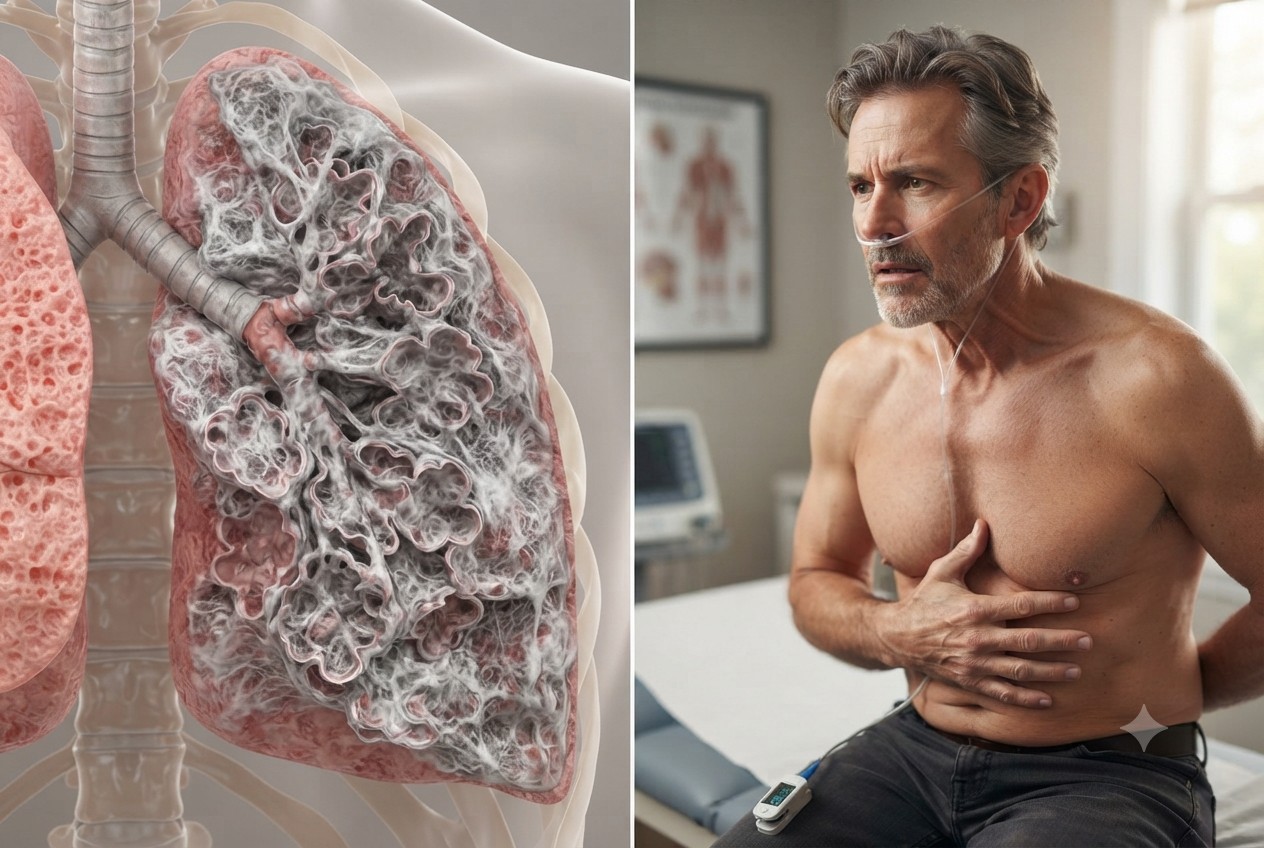
Interstitial pneumonia is a group of conditions that belong to a larger family called interstitial lung disease (also known as diffuse parenchymal lung disease). It is inflammation of the interstitium, the space between the air sacs (alveoli) and the blood vessels around them.
Unlike other types of pneumonia, interstitial pneumonia can last a long time and sometimes causes permanent scarring of the lungs.
What are the types of interstitial pneumonia?
A 2013 statement from the American Thoracic Society and the European Respiratory Society, published in the American Journal of Respiratory and Critical Care Medicine, classifies interstitial pneumonia into 8 conditions. The percentages show how common each one is:
- Usual interstitial pneumonia, also called idiopathic pulmonary fibrosis (idiopathic means the cause is unknown): 50 to 60%
- Nonspecific interstitial pneumonia (NSIP): 14 to 36%
- Cryptogenic organizing pneumonia (organizing pneumonia of unknown cause)
- Desquamative interstitial pneumonia: 10 to 17%
- Respiratory bronchiolitis-associated interstitial lung disease: 10 to 17%
- Acute interstitial pneumonia: less than 2%
- Lymphoid interstitial pneumonia
- Idiopathic pleuroparenchymal fibroelastosis (rare)
What are the symptoms of interstitial pneumonia?
Symptoms can develop suddenly (acute) or get worse slowly over a long period (chronic).
Some people with acute interstitial pneumonia have shortness of breath, cough, and fever, and then quickly go on to acute respiratory failure. A few acute cases involve severe oxygen shortage and fast breathing, and the person needs a ventilator.
Most cases, however, develop quietly and get worse over time. This makes it hard to pinpoint when the disease began and when to start treatment. The symptoms also look a lot like those of ordinary pneumonia, so the disease is easy to confuse with it or to miss.
Common symptoms include:
- Shortness of breath. Most often, nonspecific interstitial pneumonia starts with shortness of breath that comes on gradually. It tends to get more severe over time.
- Cough. The cough is usually dry, but sometimes it brings up phlegm or blood.
- Rarer lung symptoms. These include wheezing and chest pain.
- Symptoms outside the lungs. These can include bluish skin and mucous membranes (cyanosis), muscle and bone pain, fatigue, fever, joint pain, swelling (edema), skin that is sensitive to light, dry eyes, and dry mouth. They are important clues that help doctors work out exactly which type of interstitial pneumonia a person has.
- Clubbed fingers. A small number of people have widened, rounded fingertips (sometimes called drumstick fingers).
What causes interstitial pneumonia?
What causes idiopathic pulmonary fibrosis?
The cause of idiopathic pulmonary fibrosis (lung scarring of unknown cause) is not clearly known. The following are thought to raise the risk of getting the disease:
- Connective tissue diseases: systemic sclerosis, polymyositis or dermatomyositis, rheumatoid arthritis, lupus, and Sjögren syndrome
- Viral infections
- Family history
- Smoking
- Reactions to certain drugs, such as antibiotics, drugs for irregular heartbeat, anti-inflammatory drugs, anticonvulsants, cancer drugs, and sedatives
- Chemical exposure: mercury vapor, dust or fumes from compounds and products that contain beryllium or cadmium, swallowing kerosene, and the weed killer paraquat
- Physical agents: ionizing radiation from X-rays
- Environmental and occupational lung disease: inorganic dust (asbestos, heavy metals, coal dust) and organic dust (which causes hypersensitivity pneumonitis)
- Acid reflux and some other diseases of unknown cause
What causes nonspecific interstitial pneumonia?
The cause of nonspecific interstitial pneumonia is not known for certain.
It is most commonly diagnosed in women between the ages of 40 and 50. Other conditions and diseases linked to it include:
- Connective tissue disorders, such as rheumatoid arthritis, lupus, and scleroderma.
- Drugs. Amiodarone, methotrexate, nitrofurantoin, chemotherapy agents, and statin therapy have been linked to the NSIP pattern.
- HIV infection. This cause is less common now that antiviral therapy is widely used.
- Interstitial pneumonia with autoimmune features. These patients have an NSIP pattern on a lung biopsy and signs of an autoimmune disease that do not match a specific connective tissue disease.
- Hypersensitivity pneumonitis. In some patients, a lung biopsy shows no granulomas, but under the microscope multinucleated giant cells appear in an NSIP pattern.
- Other diseases, such as IgG4-related systemic disease, familial interstitial pneumonia, and graft-versus-host disease.
How is interstitial pneumonia diagnosed and treated?
This information does not replace advice from a health professional. Always talk to your doctor.
How is interstitial pneumonia diagnosed?
In the clinic, acute interstitial pneumonia looks like acute respiratory distress syndrome (ARDS). It is diagnosed when no other cause of ARDS can be found.
People with acute interstitial pneumonia are at risk of fast respiratory failure. When they are admitted to the hospital, their vital signs are usually monitored and an arterial blood gas test is done. This test shows how severe the shortage of oxygen in the blood is and whether a ventilator is needed.
The doctor then orders further tests to find the cause and make the most accurate diagnosis. These can include:
- Lung function tests
- Chest X-ray
- Echocardiogram (heart ultrasound)
- Computed tomography (CT) scan
- Tests for autoimmune diseases
- Microbiology tests
- Blood tests
- Bronchoscopy
- Lung biopsy
How is interstitial pneumonia treated?
The main principle of treatment is to remove the drug or chemical that is causing the problem, or to treat the underlying disease, such as systemic lupus erythematosus, scleroderma, rheumatoid arthritis, or dermatomyositis-polymyositis. Oxygen is given when a person shows signs of respiratory failure.
Treatment is different for each type:
- Nonspecific interstitial pneumonia: Treated with corticosteroids. Other immune-suppressing drugs, such as azathioprine or cyclophosphamide, may also be used.
- Idiopathic pulmonary fibrosis: Corticosteroids and immune-suppressing drugs are not used, because there is no evidence that they work. When a secondary infection flares up, treatment includes broad-spectrum antibiotics and oxygen. A ventilator may be considered if needed to keep oxygen saturation (SpO2) above 90%. A yearly flu vaccine and a pneumococcal vaccine are recommended; ask your doctor about the schedule.
- Eosinophilic interstitial pneumonia: Treated with corticosteroids.
- Hypersensitivity pneumonitis: Avoid the trigger that causes it, and treat with corticosteroids.
- Interstitial pneumonia with rheumatoid arthritis: Treat the rheumatoid arthritis.
- Interstitial pneumonia in people with systemic sclerosis: A combination of the immune-suppressing drug cyclophosphamide and a low dose of corticosteroids.
- Interstitial pneumonia after radiation therapy: Radiation therapy is stopped, as decided by the treating team.
- If there is no lung scarring yet: corticosteroids.
- If there is already lung scarring: oxygen, and treatment of any secondary infection.
Ask your doctor before starting, stopping, or changing any of these medicines.
People with interstitial pneumonia should also quit smoking, eat a healthy diet, and exercise regularly. Pulmonary rehabilitation exercises can help if needed.
If a person’s condition gets worse despite treatment, a lung transplant should be considered for suitable candidates after standard therapy has failed.
What is the outlook for interstitial pneumonia?
How long can someone with interstitial pneumonia live?
How serious interstitial pneumonia is, and the outlook, depend on the type of disease, whether the lungs are damaged, and if so, how severe the damage is.
The outlook for usual interstitial pneumonia is very poor. The death rate is greater than 50% at the first episode or within 6 months of onset.
The outlook for nonspecific interstitial pneumonia without scarring (fibrosis) is good, with a 5-year survival rate of 100%. People need medicine and monitoring for several months for the lung damage to heal. Nonspecific interstitial pneumonia with fibrosis causes permanent lung damage and can get worse over time. Most people with fibrotic lungs live 6 to 14 years after diagnosis.
Interstitial pneumonia is serious because it causes lasting damage to the lungs. There is currently no specific way to prevent or treat the disease. If you or someone around you has signs of it, see a doctor right away for an exam and timely treatment.
References
- New definitions and diagnoses in interstitial pneumonia — Mayo Clinic
- Definition and Classification of Interstitial Pneumonias in Human Pathology — Karger
- Acute Interstitial Pneumonia — StatPearls (NCBI Bookshelf)
- Nonspecific Interstitial Pneumonia (NSIP) — Cleveland Clinic
- An Official American Thoracic Society/European Respiratory Society Statement: Update of the International Multidisciplinary Classification of the Idiopathic Interstitial Pneumonias — ATS/ERS
- Chronic interstitial pneumonitis — Radiopaedia
- Interstitial Pneumonia — ScienceDirect Topics
Medical disclaimer
FAQHealth content is for informational and educational purposes only. It is not a substitute for professional medical advice, diagnosis, or treatment. Always talk with your doctor or another qualified health professional about any questions you have about a medical condition.